

Success Story
Omnifab
A Culture of Learning That Keeps Pace with Innovation
At a Glance
Challenge
- Sustain CNC programming capability across constantly changing one-off parts while migrating from FeatureCAM to Autodesk Fusion and continually onboarding new machinists.
Solution
- Autodesk Fusion with the Manufacturing Extension, custom CNC post processors, and recurring cohort-based training from SolidCAD
Key Outcomes
- Shared cloud access to programs across the whole team
- Post processors matched to Omnifab’s CNC machines
- Recurring training cohorts instead of one-time sessions
- Training exercises built on Omnifab’s own parts
- Smoother data exchange across Autodesk tools
- Machinists programming their own parts independently

Introduction
Inside Omnifab’s shops, the working day rarely looks like the one before it.
Every morning brings a new part, a new constraint and, often enough, a new way of pushing what fabrication can do. The machines here don’t repeat the same motion for months at a time. They move from a component bound for a forestry operation to a part for food processing, pulp and paper, or aerospace. They shape custom-built equipment designed around very specific industrial realities.
That range isn’t a marketing line. It sits at the centre of the company’s resilience.
Dominic Ébacher, Design Engineering Supervisor at Omnifab, sums it up with a smile.
« The company’s focus is not having a focus. »
Behind the line sits a deliberate strategy: build a team versatile, capable and curious enough to work across several sectors at once. When one industry slows, another takes over. That adaptability has carried Omnifab through economic swings, shifting markets and stretches of uncertainty without knocking it off its growth path.
But versatility of that kind takes more than good machines. It depends on people who can keep learning, and on digital tools that evolve at the same pace they do.
When Every Part Is a Fresh Start
In a series-production environment, a single program might run for weeks or months. At Omnifab, the reality is nothing like that.
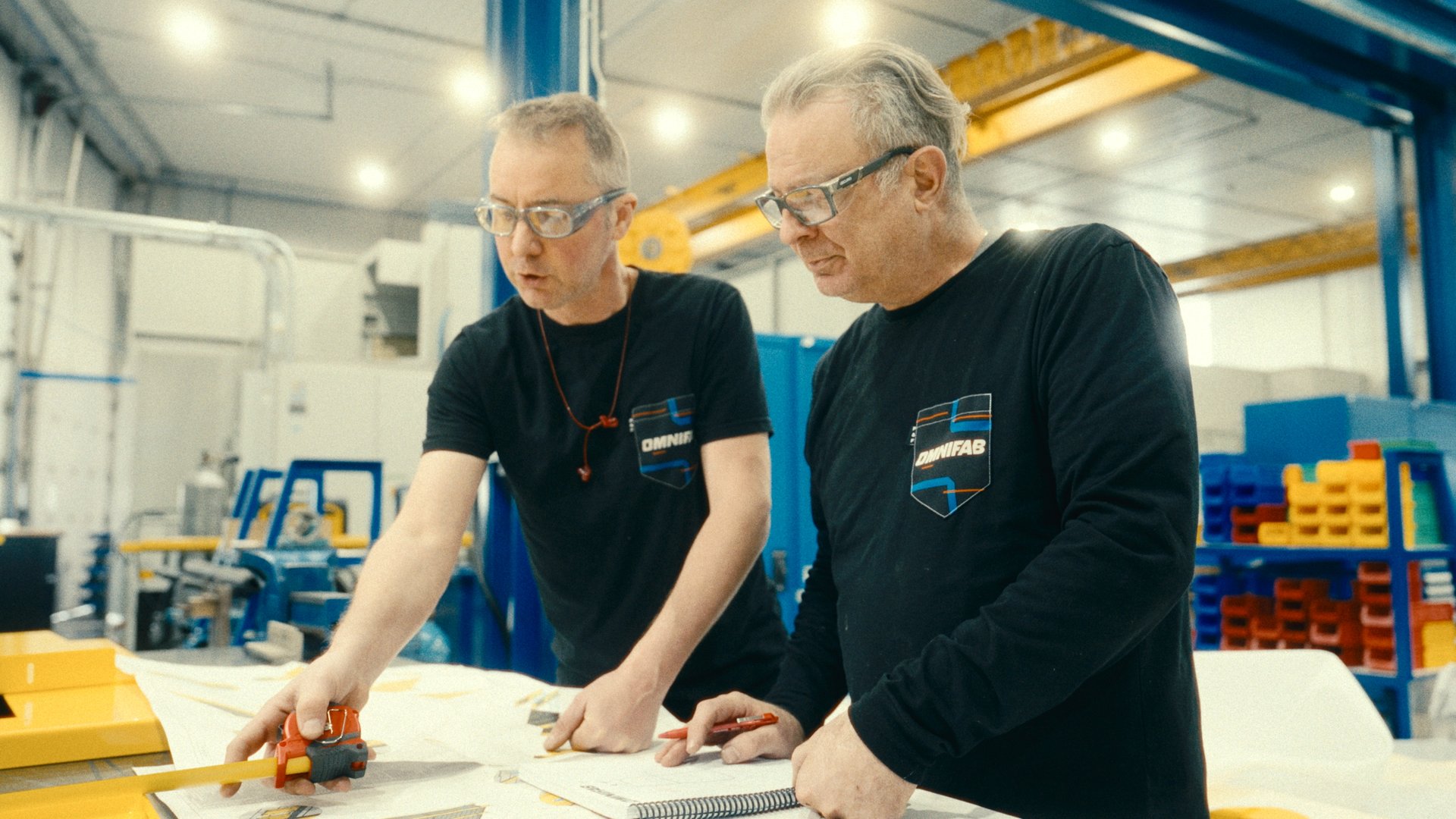
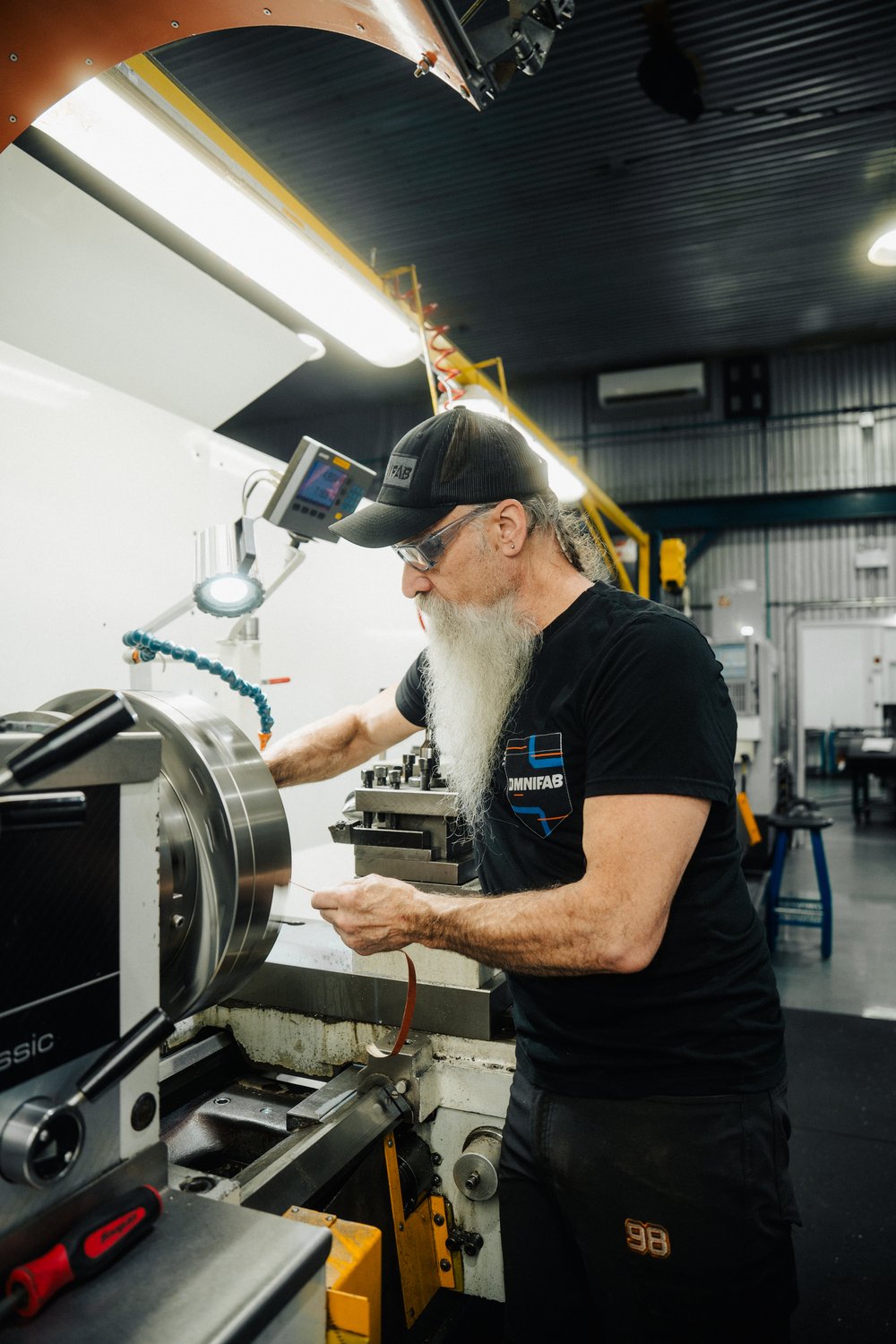
Parts are often one-off and produced in small quantities. Machinists therefore spend a significant share of the day setting up a new assembly, choosing the right tooling and programming the next operation. Every job means reading an unfamiliar geometry, anticipating new constraints and quickly landing on the best machining strategy.
Programming isn’t a step off to the side of the process. It is directly tied to the company’s ability to deliver.
The software has to be flexible, capable and accessible enough that people can work independently. At Omnifab, everyone has their own workstation and programs their own parts. That ownership gives machinists an active role in solving problems and improving how things get made.
It also creates a standing need for training.
A one-time course wouldn’t sustain an environment where the technology, the machines and the kinds of projects keep changing. Omnifab has instead settled into a regular rhythm: train a new cohort, consolidate the fundamentals, then push more experienced users toward advanced capability.
From FeatureCAM to Fusion: Guiding the Change
Omnifab’s digital history was built first around FeatureCAM. Dominic Ébacher already knew the software from his studies, so it was a natural choice when the company acquired its first significant CNC machines.
Over the years, Omnifab added machines and developed new capabilities. As the company grew, so did what it needed in terms of collaboration, accessibility and data exchange.
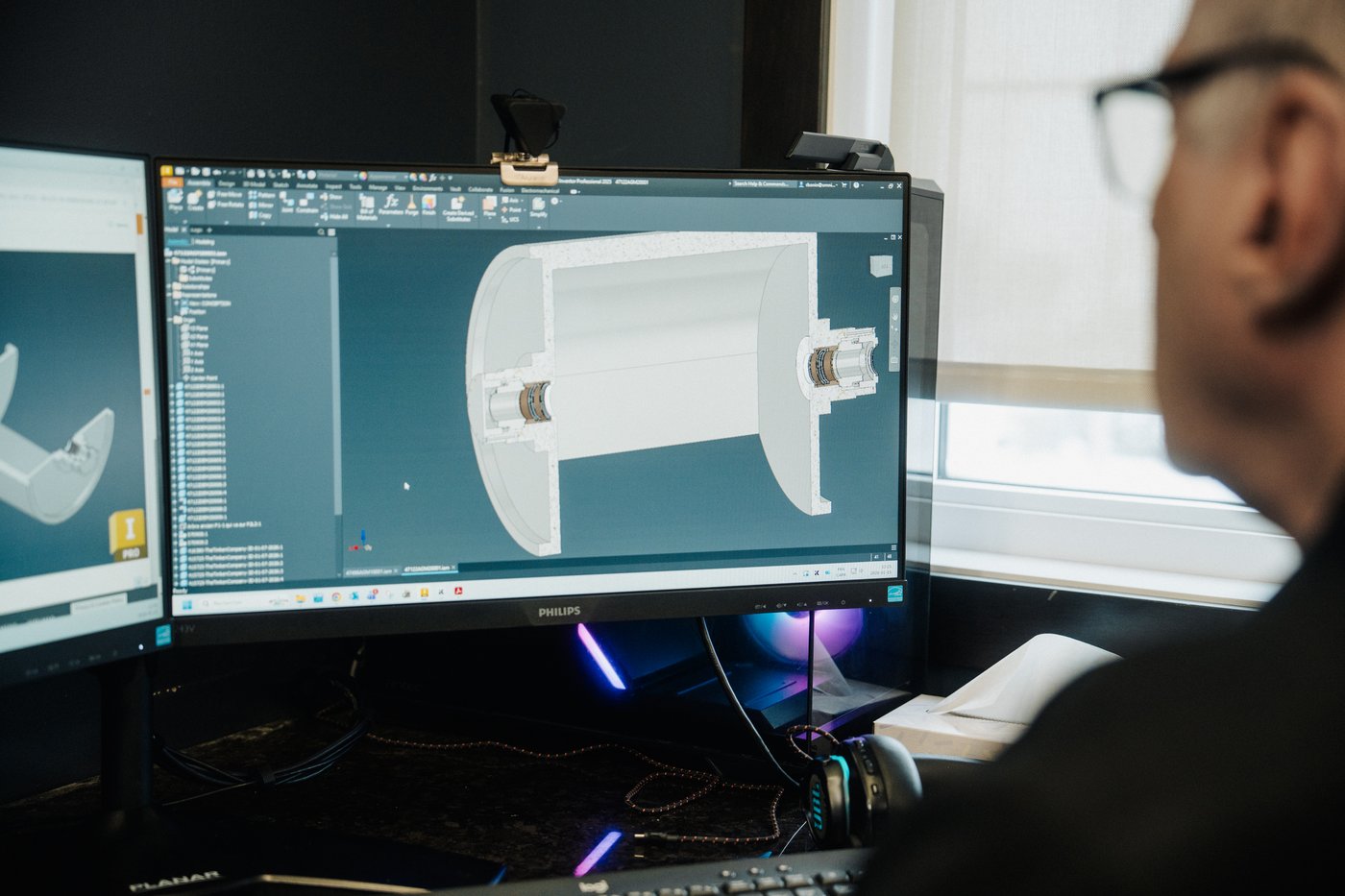
It was in that context that Omnifab moved off FeatureCAM and adopted Autodesk Fusion with the Manufacturing Extension. The change, which began in 2024, marked a significant step in how the company programs and manufactures.
To support the transition, SolidCAD put forward a structured engagement built on two essentials: training the users, and developing new post processors matched to Omnifab’s CNC machines.
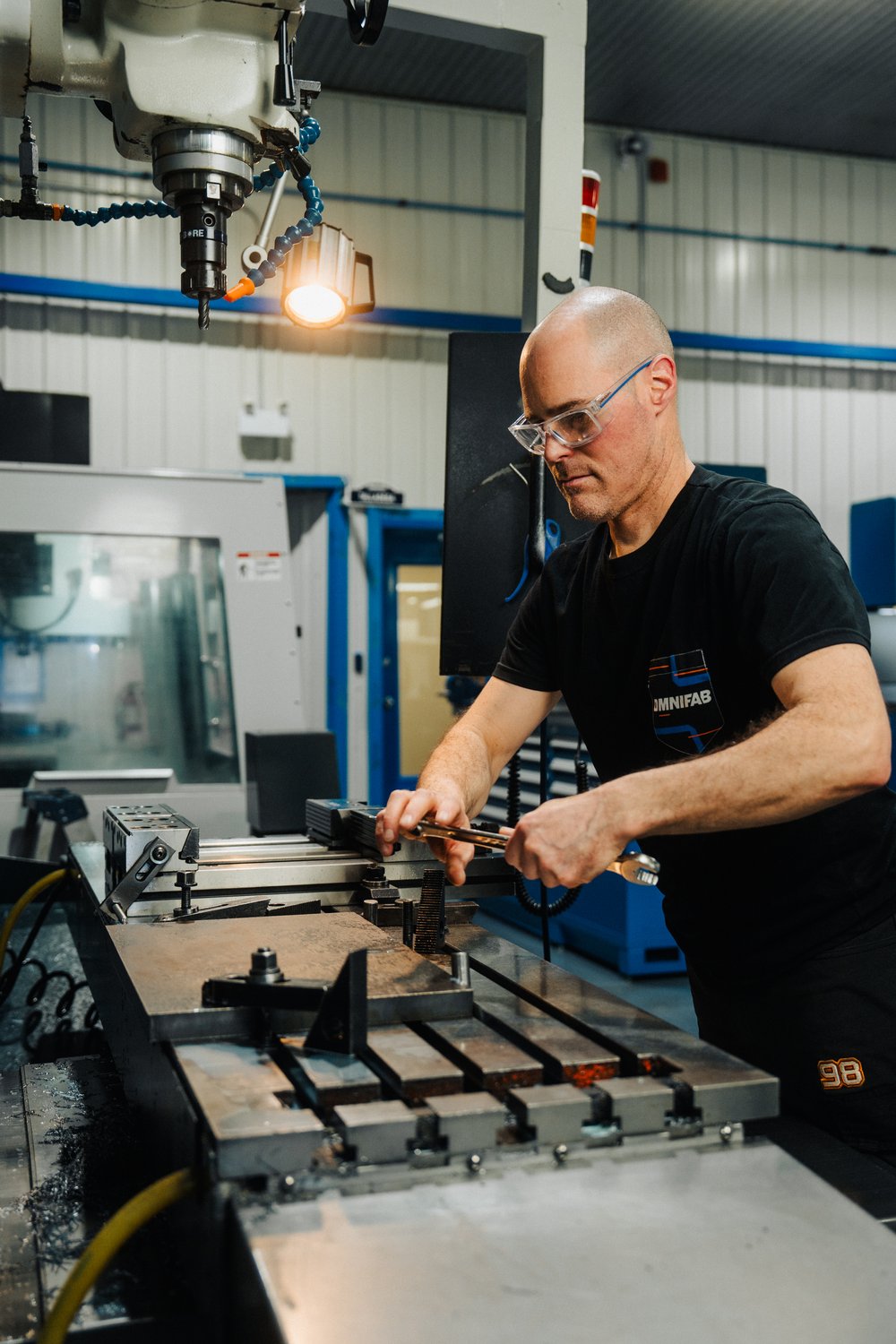
Post processors matter a great deal in a machining environment. They translate the toolpaths generated in Fusion into instructions each CNC machine can read and execute correctly. Customizing them allowed Omnifab to bring Fusion into its machine shop on the shop’s own terms, accounting for its specific equipment and production methods.
Training, for its part, helped employees find their way around a new programming environment, shore up what they knew and gradually take on the advanced manufacturing capabilities Fusion offers.
One of Fusion’s principal advantages is that it is cloud-based. For Ébacher, that shift stands out.
« Everyone has access to everyone else’s programs. That’s pretty remarkable. »
In a company where knowledge is spread across several machinists, that shared access changes the dynamic considerably. Programs no longer sit isolated on one workstation. Team members can look at a colleague’s work, pick up a project, compare methods and learn from one another.
Fusion also makes for easier exchange with the other Autodesk technologies Omnifab uses. Design, fabrication and programming can move within a more coherent environment, with less friction when files change hands. For a team constantly switching from one part to the next, every simplification counts.
A Training Rhythm That Matches Production
Technology only delivers its full value once the people using it have mastered it.
Omnifab and SolidCAD therefore established a recurring approach to training. When the company brings on enough new employees, or identifies a group ready for the next step, a cohort is formed. Sessions can be spread across several weeks, giving participants time to absorb the material, apply it and come back with new questions.
That cadence creates a learning cycle rather than a one-off event.
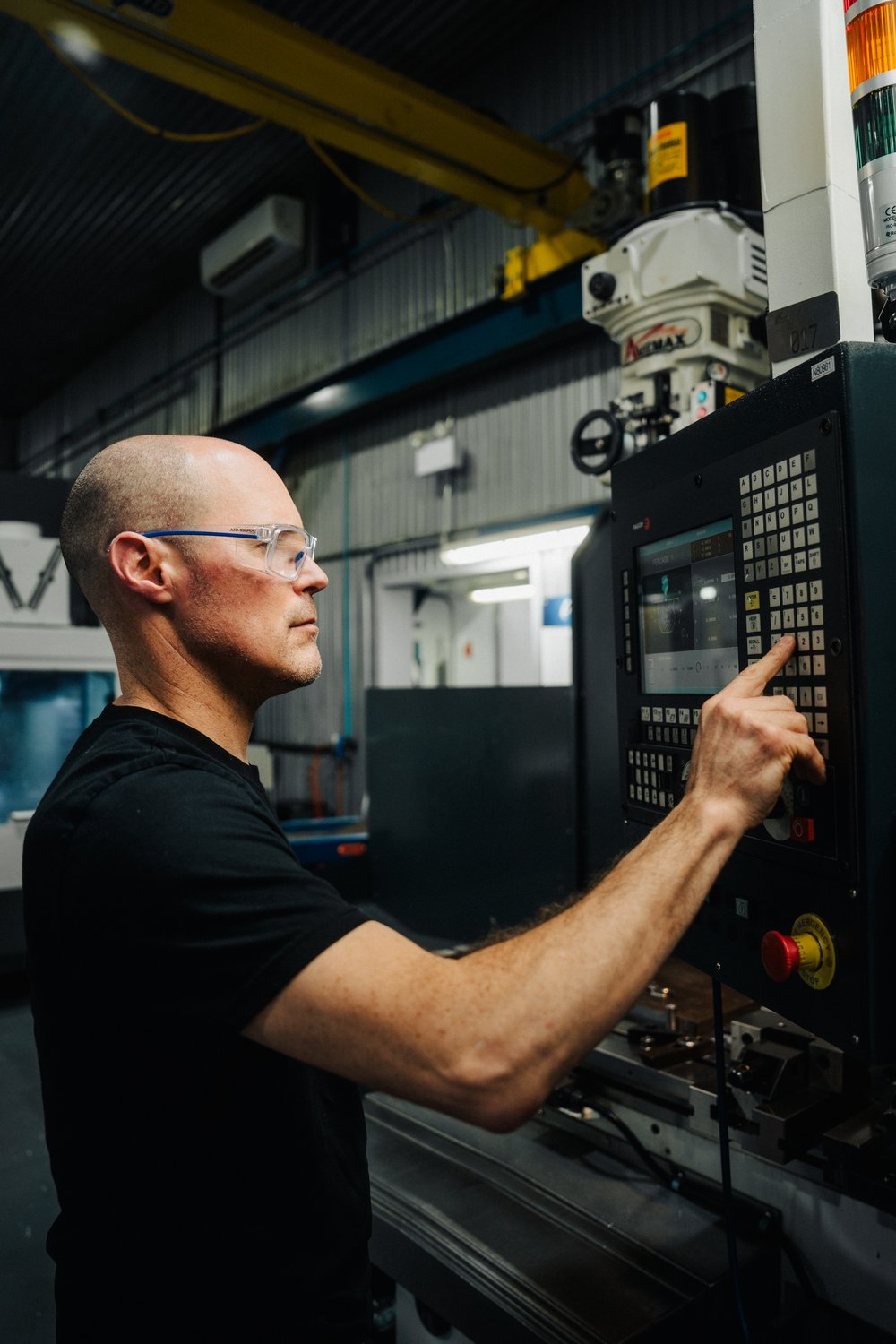
New users start with the fundamentals: the software environment, programming methods, tool libraries, cloud teams and good information-management practice. More experienced employees can then go deeper into advanced capability, including 3D programming and more complex manufacturing strategies.
Flexibility plays an essential role here. During a recent session, the program was adjusted to separate beginners from advanced users. Some of the scheduled time could then be devoted to the most experienced employees, taking them further in their use of Fusion.
SolidCAD also favours Omnifab’s own parts during training. The exercises don’t rest on generic examples alone. They are anchored in the geometries, constraints and problems employees actually run into on the floor.
Marie-Josée St-Aubin, Account Manager, Autodesk Advanced Manufacturing at SolidCAD, explains the reasoning.
« We work with your parts because that’s your day-to-day. It’s easier to absorb the information. »
That customization closes the distance between training and production immediately. New knowledge can be put to work as soon as people are back at the machine.
A Young Team Ready to Manufacture Differently
Omnifab’s ability to produce such varied components rests largely on its culture.
The company invests in technology, but it invests just as much in how its team holds together. Shared breakfasts, an on-site gym, a hockey team, social activities and a presence in motorsport all help create an environment where employees know each other, talk to each other and develop a sense of belonging.
These initiatives might look far removed from CNC programming. They are closely connected to it.
A team that communicates openly shares what it knows more readily. A machinist who feels supported is more likely to ask a question, propose a different method or help a colleague work through a problem. In an environment where every part can present a new challenge, that circulation of knowledge becomes an operational advantage.
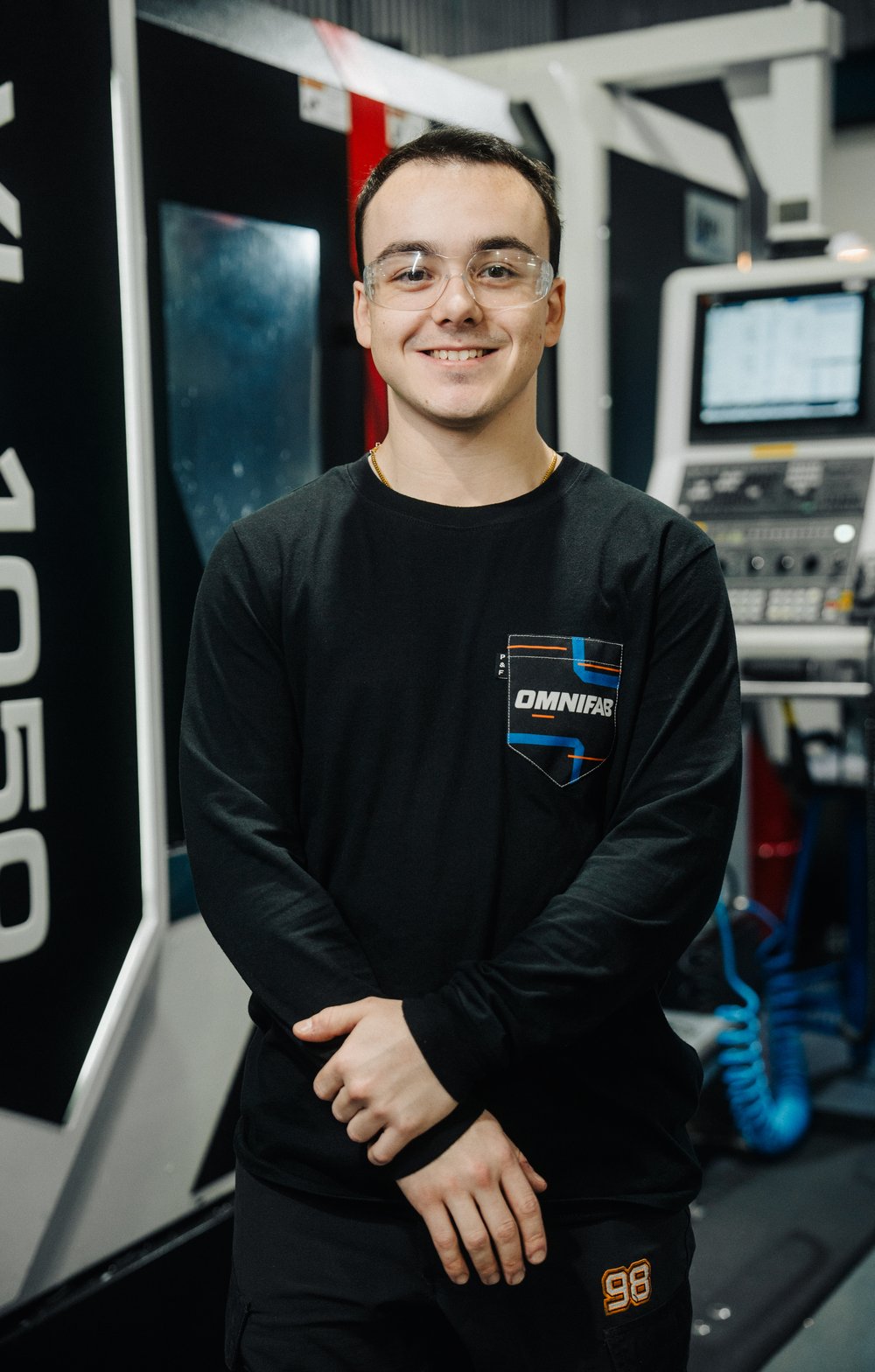
Omnifab presents itself as a young team in its energy and in how it approaches what’s ahead: curious, ambitious and ready to produce components for a wide range of industries. Its strength doesn’t come from narrow specialization but from a collective capacity to learn quickly and adapt.
Technology in Service of a Human Experience
That culture carries through to how the company works with its customers.
Omnifab puts its weight behind fast answers, deadlines that hold and a deeply human way of handling a file. Even as its markets extend into Ontario, the Maritimes and the United States, the company wants to hold on to that closeness.
For Ébacher, the priority is not negotiable.
« We’re obsessed with customer service and delivery times. »
As Omnifab widens its territory, its ability to design, build and install custom production equipment will sit at the centre of its growth. Fusion with the Manufacturing Extension, post processors built for its CNC machines and SolidCAD’s continuing support give it a solid technological base for that ambition.
Learning as Part of Production
The real transformation isn’t measured in licences or machines alone. It is in the rhythm the company has managed to establish: welcome new talent, pass on the fundamentals, deepen the skills and start the cycle again at a higher level.
At Omnifab, learning doesn’t interrupt production. Learning is part of production.
It is that combination of culture, training and technology that lets the company turn range into strength — and approach each new part not as an obstacle but as another possibility.
To learn more about Omnifab: omnifab.ca
Similar Projects
McElHanney
Énergir