

• Canadian Flag Proudly Canadian Operated
  • Uni-Fab

    Success Story

    Uni-Fab

    Built for What Comes Next: How Uni-Fab Is Expanding Its Advanced Manufacturing Capabilities with SolidCAD

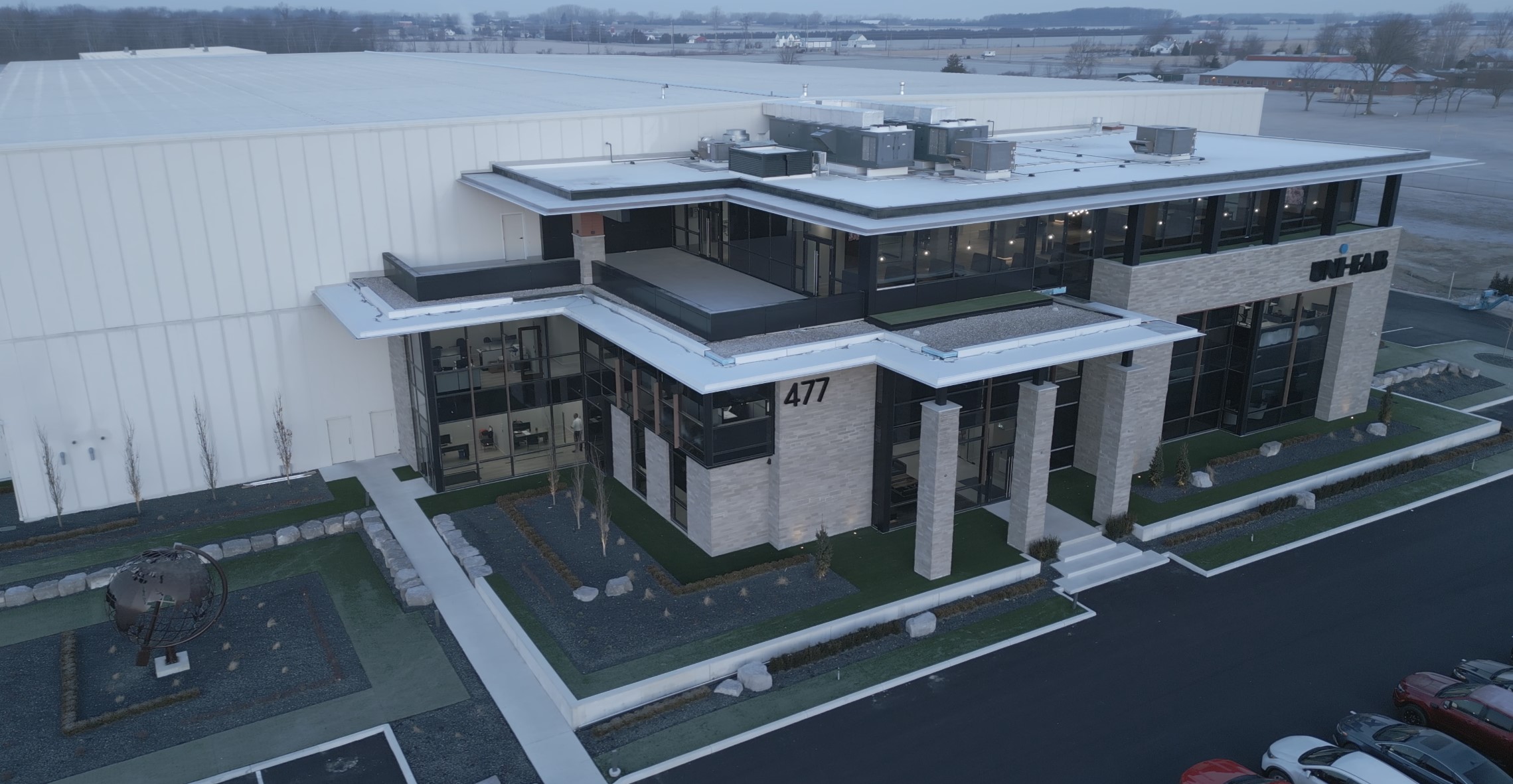
    About Uni-Fab

    Across Ontario’s industrial landscape, some of the most important work happens far from public view. Inside fabrication and machining facilities, enormous weldments are cut, shaped and finished with extraordinary precision. These components ultimately support the systems society relies on every day, from transportation and automotive manufacturing to aerospace, energy and essential infrastructure.

    This is where Uni-Fab has built its reputation.

    With extensive fabrication and machining capabilities, Uni-Fab helps customers transform ambitious designs into production-ready components. Its work spans a remarkably diverse range of industries and applications, including automotive, aerospace, nuclear projects, railways, mezzanines, staircases, hydraulic tanks and pneumatic tanks.

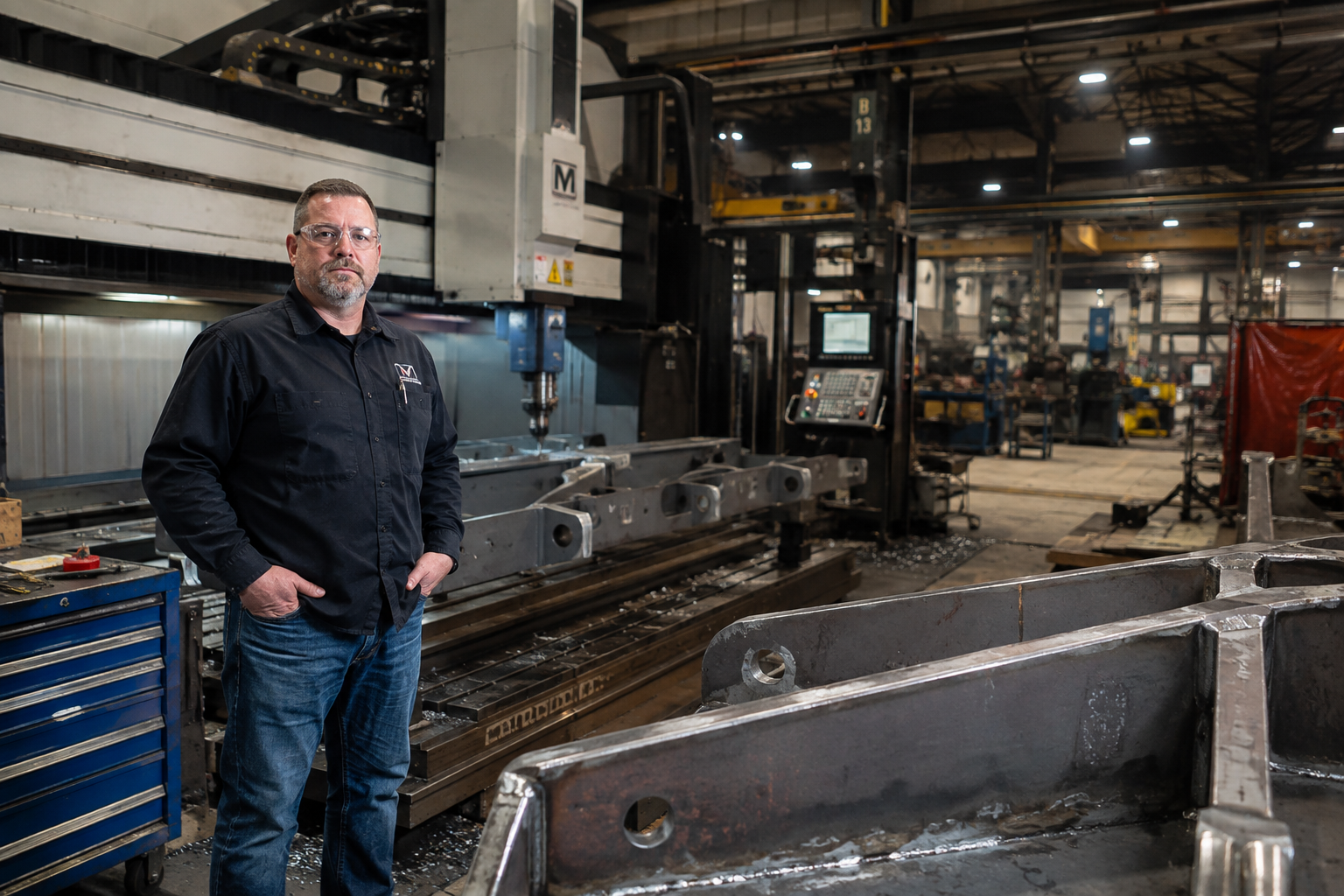
    For Joel Goodwin, Machining Operations Manager at Uni-Fab, that versatility is one of the company’s defining strengths.

    “It’s almost difficult to put your finger on what it is that we do because we do a little bit of everything. There’s not much that we can’t do.”

    — Joel Goodwin, Machining Operations Manager, Uni-Fab

    As Uni-Fab began taking on larger, more complex machining projects, the company recognized that investing in advanced equipment was only part of the equation. To realize the full potential of its machines, it also needed the right software, customized post processors and specialized technical support.

    That need led Uni-Fab to SolidCAD.

    Experience Built Across the Manufacturing Floor

    Joel joined Uni-Fab approximately six and a half years ago, bringing extensive experience from both fabrication and mould manufacturing.

    Over more than a decade in the mould industry, he worked with everything from two-dimensional and three-dimensional components to cores, cavities, fascias and optics. The experience exposed him to a wide range of machines, tooling strategies and manufacturing processes.

    When he arrived at Uni-Fab, the company was expanding its ability to machine increasingly complex weldments. Ownership was preparing to make significant investments in new equipment and modernize the machining process.

    For Joel, the opportunity was compelling. Uni-Fab had the facilities, the ambition and the willingness to invest in what came next.

    When Advanced Equipment Requires Advanced Support

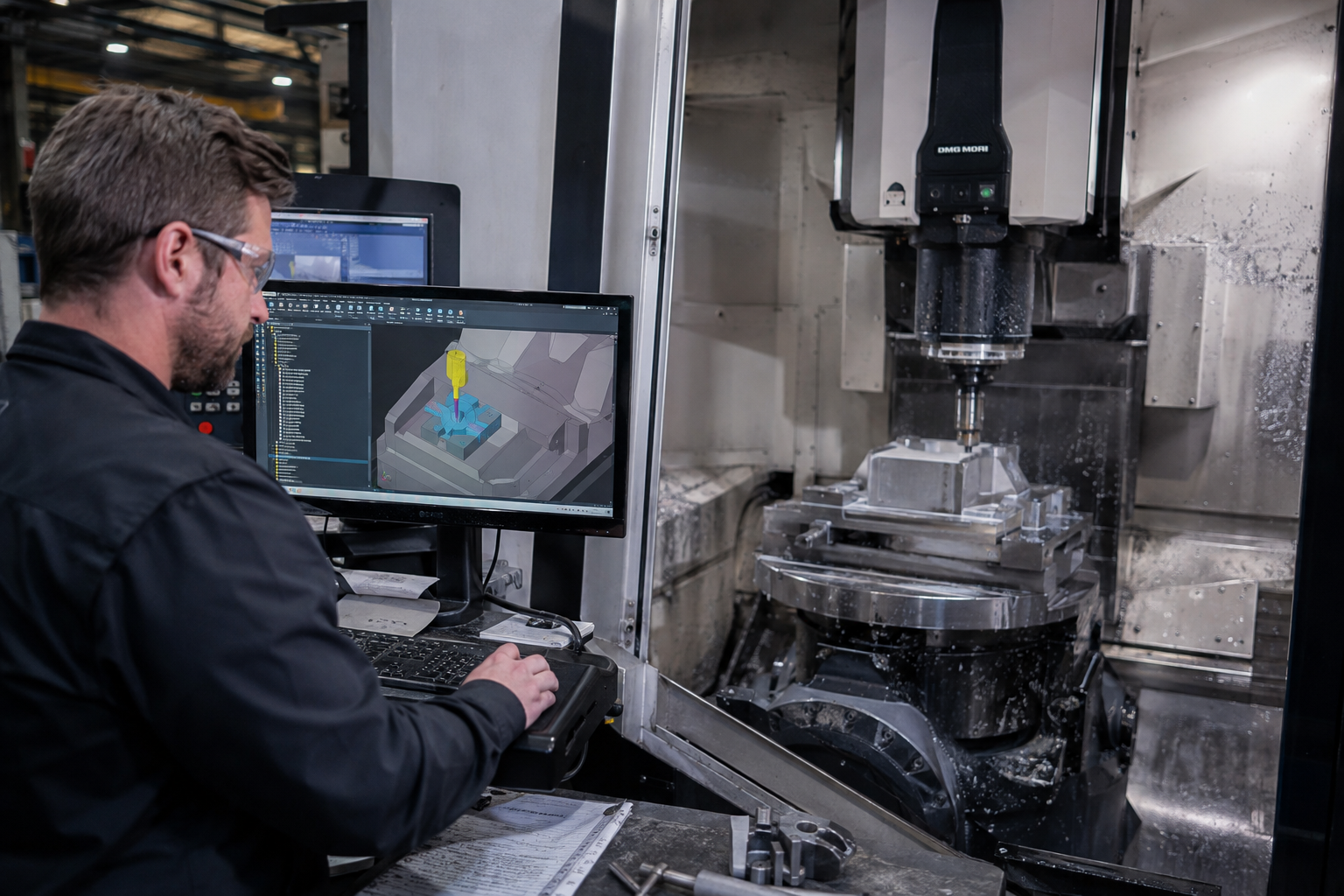
    Uni-Fab was already using Autodesk Fusion to support its machining operations. Joel had developed many of the company’s machine simulations himself and performed some minor post-processor customizations internally.

    That approach worked well for more straightforward requirements. However, the stakes changed as Uni-Fab introduced larger and more sophisticated machines, including a five-axis machine and a large-scale bridge mill.

    A machine simulation represents only one piece of the manufacturing workflow. The post processor must translate programmed toolpaths into instructions that match the exact configuration and behaviour of the physical CNC machine. On large, complex and high-value equipment, even a small discrepancy can introduce unnecessary risk.

    Joel knew when it was time to bring in additional expertise.

    “With that type of equipment, I don’t want to take chances on doing things like that myself. I’d rather involve people that do it all day, every day.”

    — Joel Goodwin, Machining Operations Manager, Uni-Fab

    SolidCAD’s reputation for post-processor customization and local customer service made it a natural fit. Instead of forcing Uni-Fab to work around generic configurations, SolidCAD could help align Autodesk Fusion with the realities of its equipment, processes and production environment.

    From Initial Assessment to Ongoing Partnership

    The engagement began with two priority machines: Uni-Fab’s five-axis Promac and its large Toshiba bridge mill.

    Joel shared the machine files, existing simulations and generic Autodesk post processors that Uni-Fab had been using. SolidCAD reviewed the work already completed and identified the customizations required to support each machine properly.

    Within days, SolidCAD was on site, assessing the equipment, running tests and collaborating directly with Uni-Fab’s machining team.

    The relationship quickly grew beyond a single implementation project. SolidCAD now provides ongoing support through regular communication and monthly health checks. During these visits, SolidCAD Application Specialist André Moisan reviews the machines, confirms that post processors remain current and helps address technical questions or outstanding concerns.

    “There is very open communication. Anytime I need pricing for something or quotes on something, the support is there.”

    — Joel Goodwin, Machining Operations Manager, Uni-Fab

    Uni-Fab also consolidated its Autodesk software portfolio through SolidCAD, including Autodesk Fusion and approximately 20 AutoCAD licences. Working with a local technology partner gave the company a simpler way to manage its Autodesk environment while gaining direct access to specialized manufacturing expertise.

    For Joel, the benefit is practical: fewer disconnected relationships, faster access to support and greater confidence that Uni-Fab’s technology is aligned with its equipment.

    Unlocking Large-Scale Five-Axis Machining

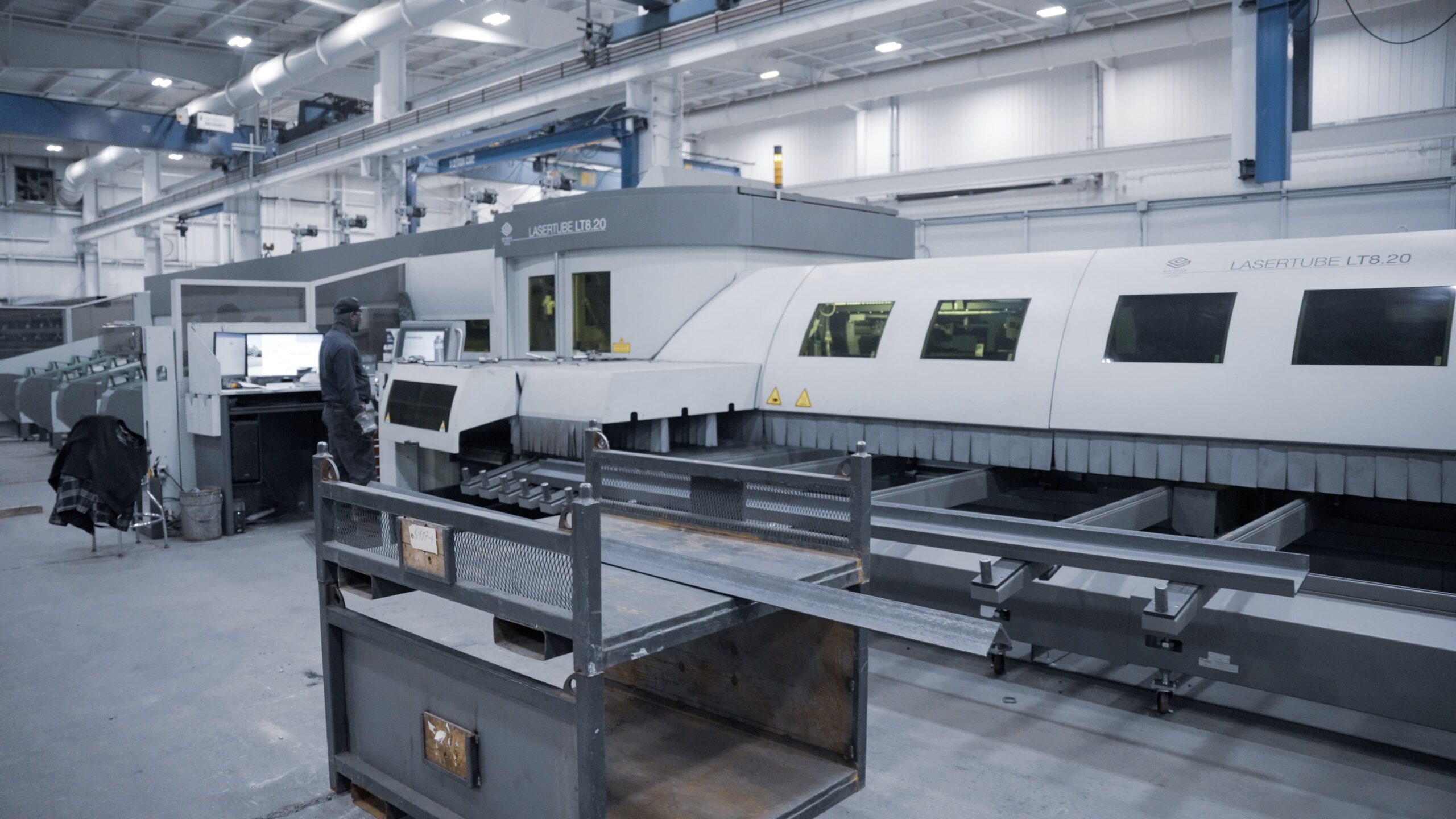
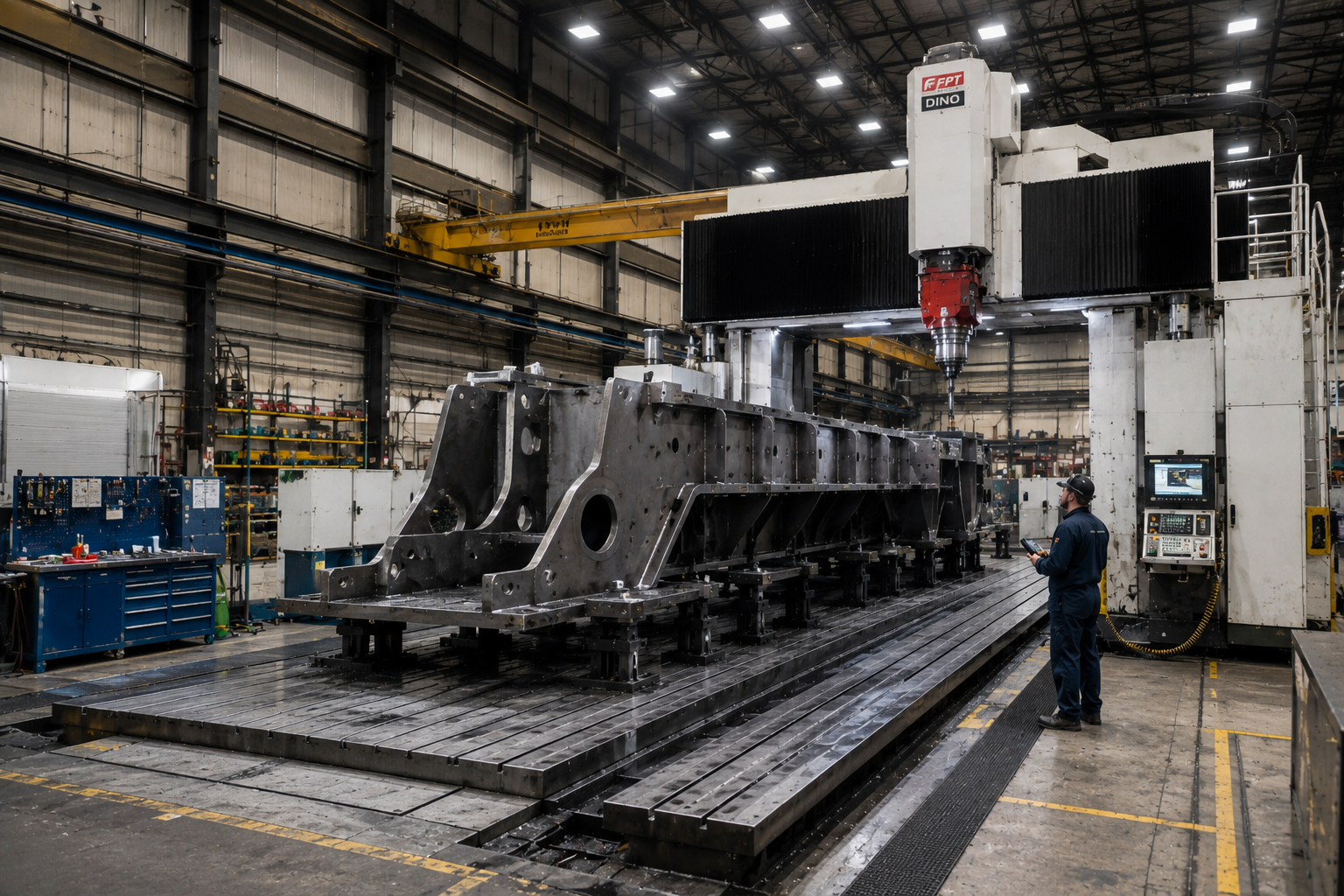
    That confidence has become increasingly important with Uni-Fab’s latest investment: a 14-metre, five-axis machine acquired from Spain.

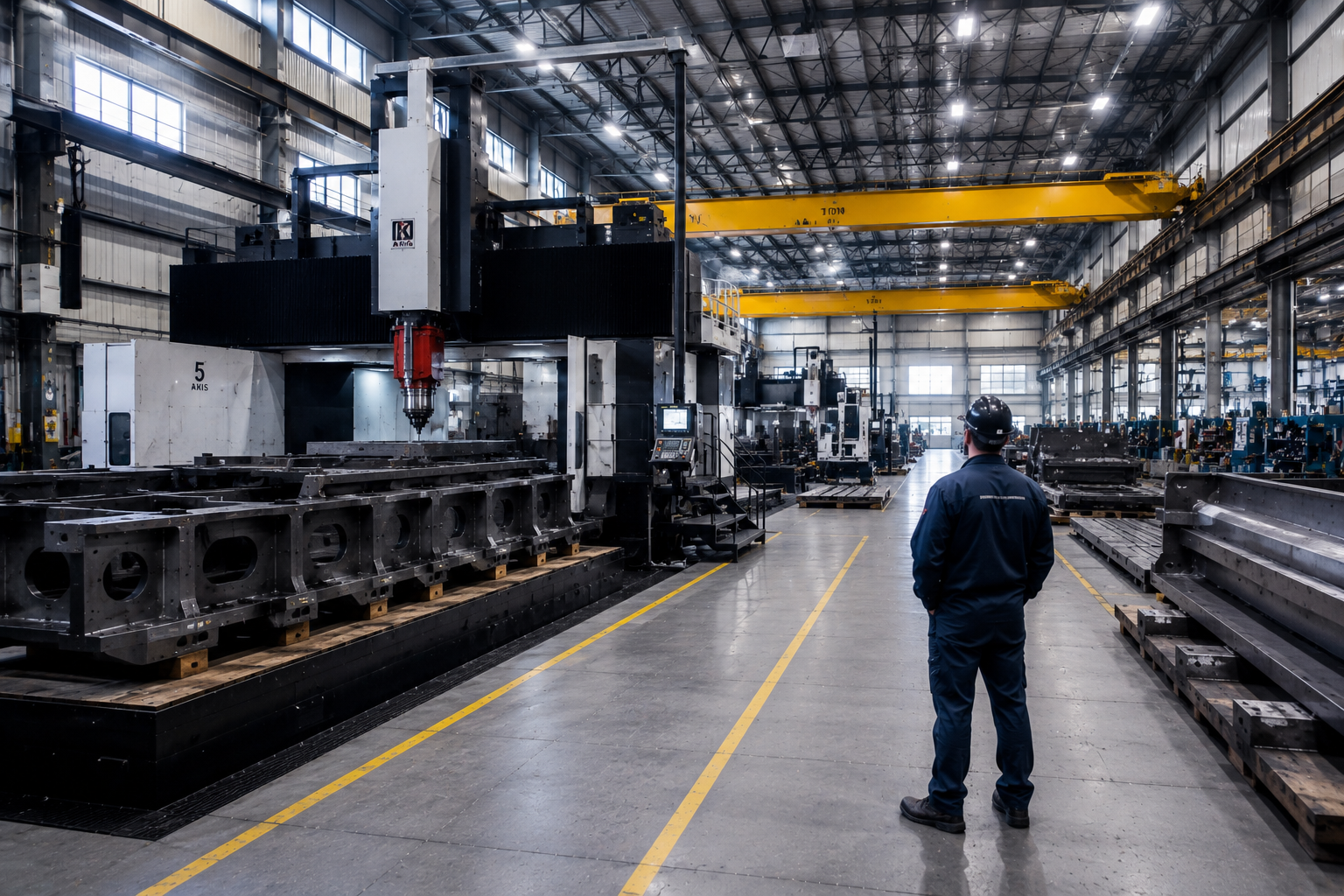
    It is a significant addition to the company’s production floor and one of only a limited number of machines of its scale and capability in Ontario. The machine allows Uni-Fab to take on the large weldments and complex projects that have become central to its manufacturing expertise.

    One of the components currently being processed is a nine-metre-long weldment, an indication of the size and complexity Uni-Fab can now accommodate.

    “This machine helps us tackle what we specialize in, which is large-scale weldments and large-scale projects.”

    — Joel Goodwin, Machining Operations Manager, Uni-Fab

    SolidCAD has supported the implementation by helping Uni-Fab refine the post processor and make the adjustments required to prepare the machine for production. That work helps connect the capabilities programmed in Autodesk Fusion with the movement and configuration of the physical equipment on the shop floor.

    The result is more than a functioning machine. It is a new level of manufacturing capacity, backed by the software configuration and technical knowledge required to use it effectively.


    Supporting the Industries Society Depends On

    The components produced at Uni-Fab may begin as steel, drawings and machining strategies, but their value extends far beyond the shop floor.

    Uni-Fab’s work supports the equipment, facilities and infrastructure behind modern life. Its components contribute to industrial production, transportation networks, automotive manufacturing, aerospace applications and emerging nuclear projects. In each case, the company helps its customers build, move and maintain the systems upon which communities and industries depend.

    As Uni-Fab expands into more demanding and highly regulated markets, precision, consistency and process control become even more important. The company is continuing to pursue the certifications needed to support increasingly advanced nuclear work and is exploring the requirements associated with controlled goods.

    These ambitions reflect a company that is not simply adding machines. Uni-Fab is building the technical, operational and quality foundation required to contribute to some of Canada’s most important industrial sectors.

    Bringing Quality Verification to the Machine

    Uni-Fab’s next opportunity is to create a more complete machining and inspection process for extremely large components.

    Moving a nine-metre weldment from a machine table into a separate quality department is not a simple task. The component must be transported, positioned and set up again before it can be inspected. This takes time and introduces another stage into the production process.

    Uni-Fab is therefore exploring ways to inspect components directly on the machine table. The goal is to machine the part, verify the results and confirm its quality without unnecessary movement or repeated setup.

    “We want to be able to set it up, machine it effectively and verify that machining, and kind of be a one-stop shop.”

    — Joel Goodwin, Machining Operations Manager, Uni-Fab

    For customers, this could create a more efficient and dependable workflow for large-scale components. It would also move Uni-Fab closer to its vision of providing a complete machining service: producing the part, verifying its accuracy and preparing it to move confidently into the next stage of its journey.

    Building Capacity for the Future

    Uni-Fab’s growth is continuing.

    The company is already evaluating potential projects that could require another major equipment investment. One opportunity could involve acquiring a similarly large-scale machine dedicated to producing a defined family of components for a customer over several years.

    Such an investment would be measured in the millions of dollars, but it would also represent something larger: new manufacturing capacity, stronger domestic production capabilities and the ability to support customers with complex, long-term requirements.

    As those opportunities emerge, Uni-Fab will continue working with SolidCAD to improve its Autodesk Fusion environment, develop its post processors and connect new software capabilities to the machines responsible for bringing its customers’ ideas to life.

    For SolidCAD, the role is to provide the expertise and continuity that allow Uni-Fab to move forward with confidence. For Uni-Fab, the objective is clear: continue investing, continue improving and remain ready to manufacture what comes next.

    “There’s not much that we can’t do.”

    — Joel Goodwin, Machining Operations Manager, Uni-Fab

    Similar Projects

    McElHanney Success Story

    As McElhanney expanded to 1,500 employees across 32 offices, knowledge became harder to scale. Inconsistent workflows, repeated support questions, and fragmented onboarding revealed a deeper challenge. In this success story, discover how[...]

    Énergir

    Énergir, Québec's leading natural gas distributor, collaborated with SolidCAD to transition from MicroStation DGN to AutoCAD DWG, enhancing data accuracy, field safety, and interdepartmental collaboration.[...]

    Procepack

    PROCEPACK is a firm specializing in the purchase and sale of packaging and process equipment. They serve customers from a wide range of industries from food and cosmetics to pharmaceuticals. They leverage their vast and…

    AME Group Success Story

    Success Story

    AME Group

    How AME Group Turned a Sudden BIM Leadership Gap into a Firm-Wide BIM Evolution

    AME Group's BIM Transformation — At a Glance

    People

    80 110 Revit/BIM users supported across offices

    3 full-time staff previously dedicated to troubleshooting to 1 proactive BIM lead

    Workflows

    100+ Revit families created and standardized

    26 Dynamo automations introduced into live projects

    60+ BIM workflows, standards, and documents implemented

    Time

    15–20 hours saved per project through automation and standardized content

    AutoCAD fully eliminated from Revit project workflows from “grasping at straws” to “leading ahead of the competition.

    About AME Consulting

    AME Group (AME) is a Canadian mechanical consulting engineering firm delivering complex building design projects across multiple offices. With many project teams working concurrently, consistency in standards, coordination, and model quality is critical to how AME delivers value to clients.

    BIM plays a central role in that delivery.

    So when AME’s internal BIM Manager left unexpectedly in mid-2024, the impact was immediate.

    Projects were already in motion. Teams were relying on established habits. Standards existed, but they weren’t consistently applied across offices. Revit was being used effectively for modelling, but not yet as the structured, automated BIM platform it had the potential to be.

    At the time, nearly 80 Revit users were working in this environment. Internal families were creating repeated model issues, and three team members were spending full time troubleshooting BIM problems instead of supporting design and coordination.

    What could have become a disruption instead became a moment of reflection.

    AME’s leadership recognized this wasn’t just a staffing gap to fill. It was an opportunity to ask a bigger question:

    How do we strengthen BIM across the organization, so it works consistently for every team, on every project, in every office?

    A Moment That Called for Both Stability and Strategy

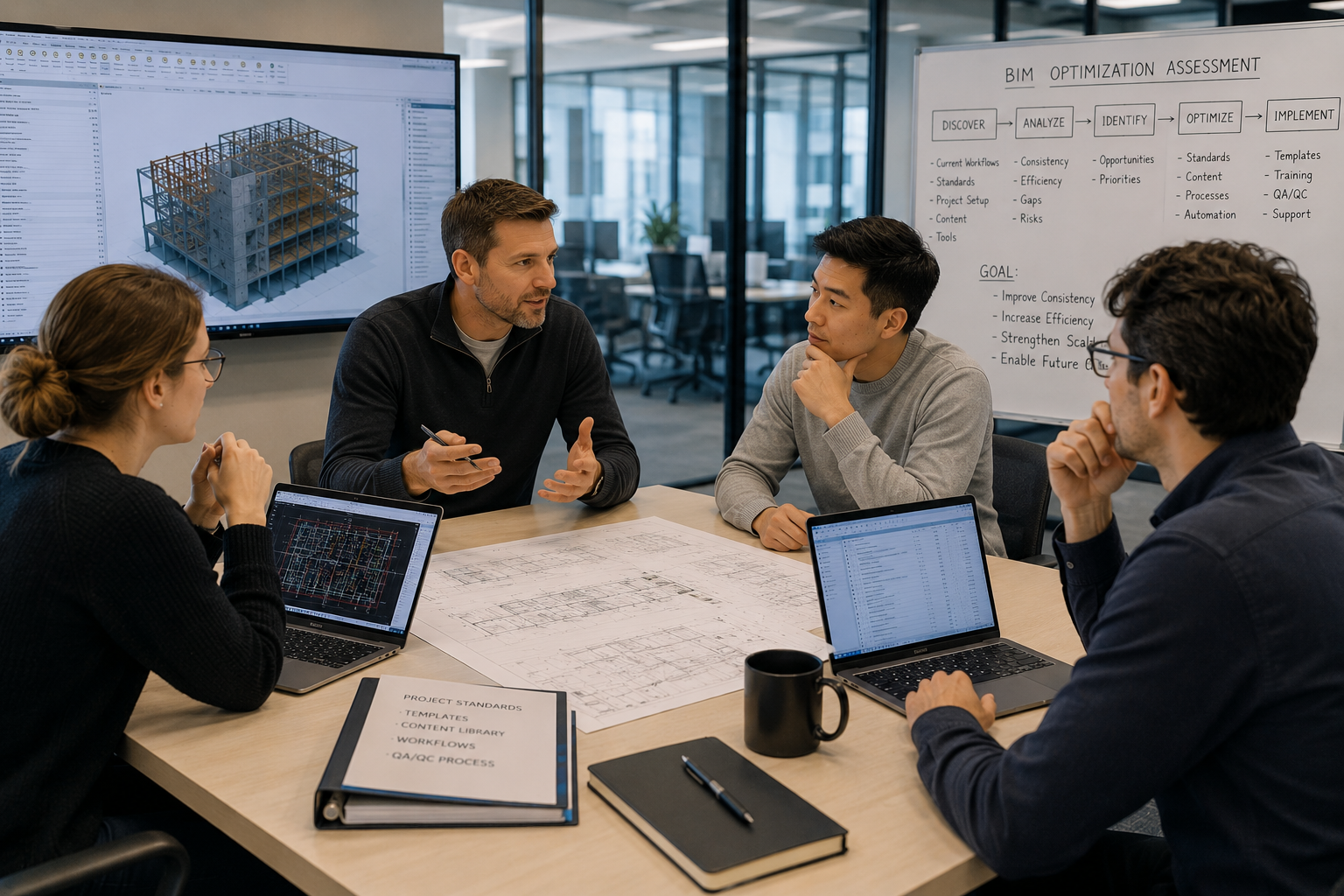
    AME needed immediate support to keep projects moving without risk. But they also wanted to step back and examine their entire BIM ecosystem — their people, processes, standards, tools, and workflows — to ensure BIM could scale with the firm’s growth.

    They began with a BIM Optimization Assessment from SolidCAD. This provided a clear view of their current environment and, more importantly, a practical roadmap forward.

    But instead of following a traditional phased implementation, AME made a different decision.

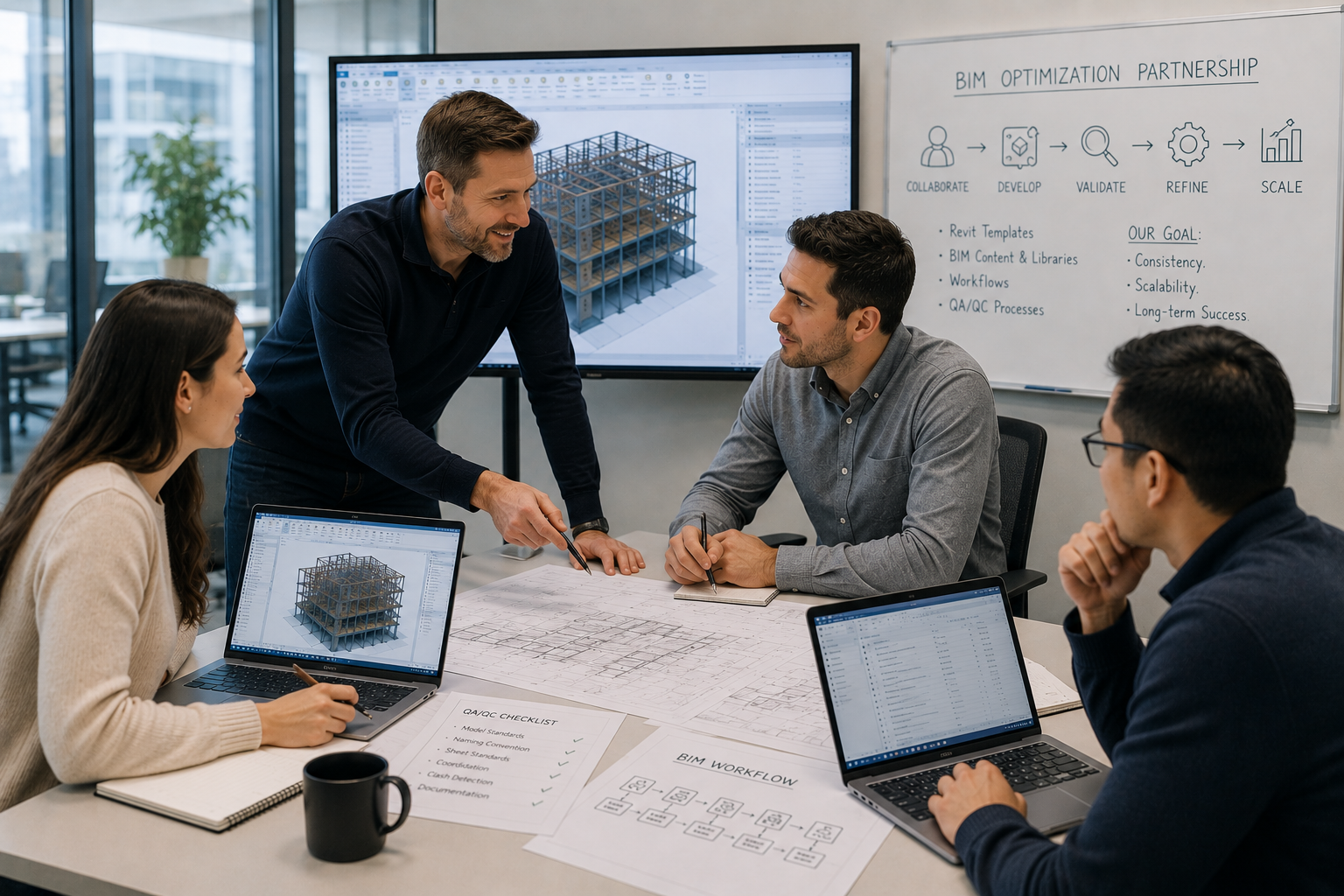
    They brought SolidCAD in as part of their team.

    An Extension of Leadership, Not Just Support

    Through ongoing BIM Management services, SolidCAD’s Drew stepped into the role of acting BIM Manager for AME.

    He wasn’t an external consultant checking in periodically. He became a consistent presence — responding to tickets, supporting project teams, mentoring BIM coordinators, and guiding day-to-day BIM practices while steadily implementing the recommendations from the assessment.

    As AME’s team grew from 80 to over 110 BIM users, this structure became even more critical. The work being done wasn’t just maintaining stability — it was preparing the firm for growth.

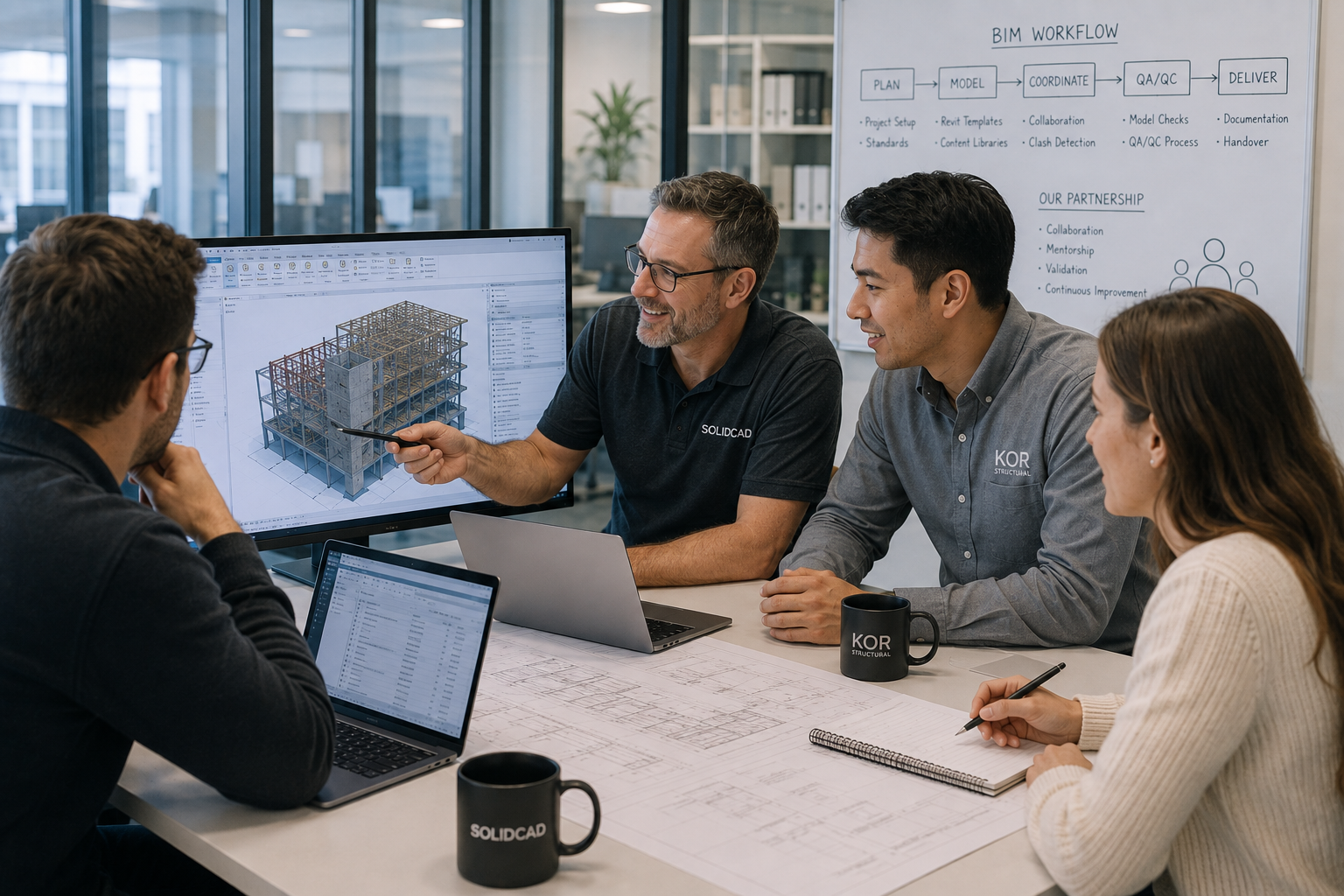
    What began as short-term assistance evolved into a long-term partnership that continued from June 2024 through early 2026.

    Quiet Changes That Made a Big Difference

    AME’s BIM environment didn’t change through one large rollout. It improved steadily through practical, project-driven changes introduced directly into live work.

    A structured BIM ticketing system gave teams a clear path for support. BIM roles and responsibilities became defined. Model health checks, clash workflows, and QA/QC processes were documented and embedded into daily practice.

    Revit templates, families, and content were standardized. Custom mechanical families and fittings were created. Dynamo standards and automations were introduced to reduce repetitive work. Standardized model groups and assemblies became building blocks for projects.

    Over the course of the engagement:

    • 100+ Revit families were created or standardized
    • 26 Dynamo automations were implemented
    • 60+ workflows, standards, and documents were developed and rolled out

    None of this was theoretical. It was built into the way teams worked every day.

    The Impact on Projects and Teams

    As these changes took hold, AME began to feel the difference.

    Where three people were once dedicated full-time to troubleshooting, AME’s BIM function is now supported by one full-time lead who focuses on proactively setting up models for success rather than reacting to issues.

    Automation and standardized content are estimated to be saving teams 15–20 hours per project. Most BIM issues today are unique one-offs rather than repeat errors caused by standards or content.

    Teams are now consistently using internally developed Revit families tied directly to schedules, details, and schematics.

    And for Revit-based projects, AutoCAD has been fully eliminated from the workflow.

    Project delivery became more predictable. Collaboration improved across offices. BIM became less of a tool teams had to manage and more of a system that supported how they worked.


    A Partnership That Naturally Evolved

    Throughout the engagement, AME’s feedback was consistently positive. The service was extended multiple times as the relationship deepened.

    But by late 2025, the conversation changed.

    AME no longer needed someone to lead their BIM practice. They were ready to lead it themselves.

    Support tapered from two days per week in January 2026 to one day per week in February, as the engagement concluded.

    This wasn’t the end of a service. It was the achievement of the goal.

    A Stronger, Self-Sufficient BIM Practice

    What began in June 2024 as a team “grasping at straws” evolved into a BIM practice AME now describes as leading ahead of their competition.

    Today, AME has:

    • Clear BIM standards and workflows
    • Optimized Revit environments
    • Embedded automation into daily work
    • Structured QA/QC and model health practices
    • Internal confidence to manage and evolve BIM independently

    SolidCAD’s role was never to replace AME’s team.

    It was to strengthen it, until they no longer needed the support.

    And that is exactly where AME is today.

    Testimonial

    "What started as a need for short-term BIM support became an opportunity for us to step back and strengthen how we approach BIM across AME.

    “Over time, our teams became more consistent, our standards clearer, and our use of automation more effective. Today, we feel confident in our ability to manage and evolve our BIM workflows internally — and that’s been a meaningful outcome for our organization made possible with the support of Drew and the SolidCAD team.”

    — Louise McKenzie, Principal of Operations, AME Group

    Similar Projects

    McElHanney Success Story

    As McElhanney expanded to 1,500 employees across 32 offices, knowledge became harder to scale. Inconsistent workflows, repeated support questions, and fragmented onboarding revealed a deeper challenge. In this success story, discover how[...]

    Énergir

    Énergir, Québec's leading natural gas distributor, collaborated with SolidCAD to transition from MicroStation DGN to AutoCAD DWG, enhancing data accuracy, field safety, and interdepartmental collaboration.[...]

    Procepack

    PROCEPACK is a firm specializing in the purchase and sale of packaging and process equipment. They serve customers from a wide range of industries from food and cosmetics to pharmaceuticals. They leverage their vast and…

    Built to Scale: How Greenlane Reinvented Its Operations for Sustainable Expansion

    Case Study

    Built to Scale: How Greenlane Reinvented Its Operations for Sustainable Expansion

    An Energy Transition Leader at an Inflection Point

    As a pioneer and leading specialist in biogas desulfurization and upgrading, Greenlane Renewables has been actively contributing to the decarbonization of our planet for over 35 years with more than 355 systems supplied into 28 countries.  Their systems transform biogas generated from organic waste into high-value low-carbon grid-ready renewable natural gas (“RNG”) from a wide range of sources such as landfills, sugar mills, dairy farms, wastewater, and food waste. But as climate urgency accelerated and global demand surged, Greenlane faced a familiar challenge for high-growth innovators:

    How do you scale complex engineering operations without compromising quality, innovation, or sustainability?

    Greenlane was expanding fast, deploying biogas upgrading systems internationally. But behind the scenes, the company’s legacy Engineer-to-Order (ETO) model was slowing progress.

    “We had the technology and the market. But our internal systems hadn’t kept pace. If we wanted to scale without compromising quality, something had to change.”

    – Duran Cheung, Director of Engineering Services, Greenlane Renewables

    The Growing Pains of a Custom Engineering Model

    Greenlane’s engineering team had long been known for its adaptability and custom project delivery. However, the Engineer-to-Order (ETO) model led to duplicated efforts, documentation that was challenging to track, and siloed systems that made it difficult to scale.

    “At one point, we had 50+ copies of the same document floating around. It wasn’t just inefficient—it made it harder to innovate. We needed a better way to manage product data and eliminate unnecessary work.”
    Duran Cheung

    Key Challenges holding them Back

    Behind Greenlane’s reputation for innovation was a set of growing operational challenges. Teams were working from disconnected systems, and critical information was often slow to communicate and required manual operations. Collaboration between engineering and procurement lacked structure, and reusing past work often meant starting from scratch.

    There was no single place to track a part’s full lifecycle—and as the company scaled, so did the complexity of its compliance and reporting needs. Better traceability was required. The opportunities for improvement were becoming impossible to ignore.

    The Shift: From Custom Chaos to Configured Clarity

    Instead of hiring more engineers, Greenlane made a strategic decision: transform their business model from ETO to Configure-to-Order (CTO). This shift would require new systems, tighter workflows, and a single digital thread from design to delivery.

    They partnered with SolidCAD to lead the transformation.

    “We weren’t just adding software. We were rethinking how we work as an organization. SolidCAD brought the knowledge and their unique support to help us do it right.”
    Duran Cheung

    The Solution: Fusion Manage + SolidCAD Expertise

    SolidCAD helped Greenlane implement Autodesk Fusion Manage, configuring the cloud-based PLM platform to meet the company’s unique needs as a cleantech solutions provider. Workspaces were created for Engineering, Supplier Management, and Quality, standardizing everything from part creation to BOM lifecycles.

    To amplify impact, SolidCAD also integrated Fusion Manage with NetSuite ERP using the Nexus connector, ensuring seamless and instantaneous data handoffs from engineering to procurement.

    “Now, when an item is approved in PLM, it flows into ERP automatically—with part numbers, supplier, and documentation data included. That kind of automation didn’t exist before.”
    Duran Cheung Continue reading “Built to Scale: How Greenlane Reinvented Its Operations for Sustainable Expansion”

    SolidCAD Announces Acquisition by Symetri, Part of Addnode Group

    SolidCAD Announces Acquisition by Symetri, Part of Addnode Group

    A Strategic Move to Enhance Global Expertise and Service for Autodesk and Bluebeam Clients across Canada

    Toronto, ON, October 7, 2025 – SolidCAD, a leading Canadian provider and consultant of technology solutions for the architecture, engineering, construction, and manufacturing sectors, is excited to announce that it has been acquired by Symetri, a global leader in digital solutions for industries that design, build and manufacture. SolidCAD has operated in Canada as a subsidiary within the Cansel Group of Companies.  This transaction marks Symetri’s entry into the Canadian market.

    Symetri is part of Addnode Group, an internationally recognized leader in digital transformation. Through this acquisition, SolidCAD joins Symetri’s global network of over 1,000 employees in 30 offices across Europe, the United States and Brazil, serving more than 25,000 customers.

    Symetri is an Autodesk Platinum Partner and its focus on innovation and sustainability aligns perfectly with SolidCAD’s mission: to simplify technology so people can work smarter, with greater clarity and confidence.

    Strategic Alignment with Autodesk and Bluebeam

    This marks a significant moment for SolidCAD, as the organization joins forces with Symetri to strengthen its alignment with Autodesk and Bluebeam. As SolidCAD operates as Bluebeam’s only Sapphire Partner and Autodesk’s largest Platinum Partner in Canada, they can combine expertise of both companies. Clients across Canada will benefit from an expanded portfolio of solutions, deeper industry knowledge, and enhanced support tailored to the evolving needs of design, manufacturing and construction professionals.

    Expanded Solutions: Naviate, Sovelia and CQ Products & Services

    As part of this transition, SolidCAD will introduce Symetri’s renowned Naviate, Sovelia and CQ products and services to the Canadian market. Naviate and Sovelia offers advanced productivity tools for Autodesk users, while CQ delivers comprehensive licence deployment and optimisation solutions. This addition broadens the range of innovative tools available to clients, helping organizations optimize workflows and achieve new levels of efficiency.

    Commitment to Clients and Employees

    SolidCAD, Symetri, and Addnode Group are united in their commitment to ensuring a seamless transition for all clients and employees. There will be no disruptions to ongoing projects, service agreements, or day-to-day operations. Clients can expect the same high level of expert consulting and support, while employees will continue to work within a collaborative and growth-focused environment. The integration aims to create new opportunities for professional development and knowledge sharing.

    Leadership Perspectives

    Marcus Tateishi, President, SolidCAD: “Joining Symetri and Addnode Group is a tremendous step forward for SolidCAD. Our clients will benefit from an expanded set of solutions and global expertise, while our team gains new opportunities to innovate and grow. We remain dedicated to delivering the best possible service and support.”

    Martin Trudelle, CEO of Cansel Group: “This acquisition represents a positive and strategic development for SolidCAD. As SolidCAD continues to grow, we see tremendous value in them joining an organization that truly understands their business units, their partners, and the broader CAD industry. With SolidCAD’s deep involvement in this space, we are confident that their clients will benefit from even stronger and more aligned support, empowering them to thrive in an ever-evolving technological landscape.”

    Jens Kollserud, CEO, Symetri: “We are delighted to welcome SolidCAD into the Symetri and Addnode Group team. Together, we will deliver even greater value to our clients, combining local expertise with global resources. Our shared vision focuses on innovation, sustainability, and empowering our customers to achieve their goals.”

    Looking Ahead

    SolidCAD’s acquisition by Symetri opens a new chapter of growth, collaboration, and innovation. Clients and partners can look forward to enhanced support, a broader range of solutions, and ongoing dedication to their success. For further information, please contact: marketing@solidcad.ca.

    Fort Capital Partners acted as the financial advisor to Cansel and SolidCAD in this transaction

    About Symetri

    Symetri creates and provides technology solutions and services for design, engineering, construction and manufacturing businesses. We empower people to work smarter for a better future by ensuring they have access to the expertise and technology they need to improve their performance and sustainability.

    Symetri was founded in Sweden in 1989 and has grown to a team of over 1000 people with offices throughout Sweden, Norway, Denmark, Finland, UK, Ireland, US and Brazil. Symetri is an Autodesk Platinum Partner, Autodesk Authorised Training Centre (ATC) and Autodesk Global Service Provider.

    Symetri is part of Addnode Group AB, whose B shares are listed on the Nasdaq Stockholm. Addnode Group offers business-critical IT solutions to selected markets in both the private and public sectors.

    For more information, visit: www.symetri.com.

    About Addnode Group

    Addnode Group acquires, operates, and develops cutting-edge enterprises that digitalize society. With 2,700 employees across 20 countries, Addnode Group is a leading global provider of software and services for design, construction, product data, and facility management.

    For more information, visit:  www.addnodegroup.com/

    SolidCAD Expands Portfolio with GoCanvas and SiteDocs, Delivering Safety and Compliance Innovation to Canadian Worksites

    TORONTO – September 22, 2025 – SolidCAD, a leading Canadian technology consulting firm, today announced a strategic portfolio expansion through partnerships with GoCanvas and SiteDocs, bringing advanced compliance, health, and safety management solutions to organizations across Canada.

    GoCanvas, part of the renowned Nemetschek Group parent company to technology brands like Bluebeam, empowers field teams to move beyond outdated paper-based processes with digital data capture, GPS tracking, and connected workflows. As Bluebeam’s only Sapphire Partner in Canada, SolidCAD is uniquely positioned to extend these solutions to current Bluebeam clients while also expanding into the broader health and safety space. Through GoCanvas offerings such as SiteDocs, SolidCAD can also deliver dedicated compliance solutions that support safety leaders and EHS professionals in building safer, audit-ready workplaces.

    Through this partnership, SolidCAD strengthens its ability to provide connected, integrated solutions that bridge design, data, and compliance. Bluebeam users will soon be able to seamlessly connect GoCanvas workflows with Bluebeam Revu, enabling teams to assign tasks, dispatch forms, track real-time status, and link submissions back to Revu markups for streamlined documentation.

    “Most of our clients in construction, utilities, and manufacturing are still relying on pen and paper for compliance and safety management,” said Marcus Tateishi, President at SolidCAD. “With GoCanvas and SiteDocs, we are delivering modern, digital solutions that not only improve compliance and support COR certification but also protect the health and safety of every worker in the field. Combined with Bluebeam, these tools give Canadian firms the technology ecosystem they’ve been asking for, while opening the door to serve the broader health and safety sector with purpose-built compliance technology.”

    SiteDocs, part of the GoCanvas portfolio, adds specialized safety compliance management capabilities, including digital safety forms, real-time dashboards, analytics, and audit-ready reporting. Its strong alignment with Canadian workplace standards makes it a natural fit for organizations that must meet COR certification and other compliance requirements.

    SolidCAD’s expanded offering will be further showcased at Bluebeam’s Unbound event in Washington, DC from September 30 to October 2, where attendees will get an exclusive look at the connection points between Bluebeam, GoCanvas, and SiteDocs, and the transformative impact these solutions can have on project delivery, compliance programs, and worker safety.

    “There’s been a lack of innovation in the compliance and safety space,” added Jon Coley, SVP, of Sales at GoCanvas. “By partnering with GoCanvas and SiteDocs, SolidCAD is filling that gap, bringing powerful technology solutions to the Canadian market and helping businesses transition away from manual, paper-driven processes.”

    To learn more about GoCanvas or SiteDocs, visit gocanvas.com and sitedocs.com


    About GoCanvas

    GoCanvas is a leading mobile and cloud-based platform that replaces outdated paper processes with digital forms and connected workflows. Designed for field teams across industries such as construction, utilities, and manufacturing, GoCanvas simplifies the way organizations capture, track, and share data. With features like GPS integration, image capture, signatures, and offline functionality, the platform delivers real-time visibility into field operations while improving accuracy and efficiency. Backed by the Nemetschek Group, GoCanvas empowers businesses to reduce risk, save time, and achieve stronger compliance through digital transformation.

    About SiteDocs

    SiteDocs, part of the GoCanvas portfolio, is an award-winning safety management software built to help organizations create safer, more compliant worksites. The platform digitizes critical health and safety processes—such as inspections, hazard assessments, and incident reports—while providing real-time dashboards and analytics for decision-makers. SiteDocs also supports certification tracking and audit-ready reporting, making it easier for companies to meet COR certification and other compliance standards. By replacing manual, paper-driven workflows with a modern digital solution, SiteDocs enables safety leaders to proactively manage risk and foster a stronger culture of safety across every jobsite.

    Northern Transformer Corporation

    Case Study

    Northern Transformer Corporation

    Powering Canada’s Future: How Northern Transformer is Leading Grid Modernization

    For decades, Canada’s aging power grid has quietly carried the weight of an expanding, electrified society. Designed for a different era, this infrastructure—now averaging 50 to 70 years old—was never meant to handle the increase of demand we see today. 

    The shift toward renewable energy, electrification, and large-scale industrial and resource electrification has driven the need for high-performance power transformers, which are critical for ensuring the grid can meet the demands of a modern, electrified society. Utilities across North America are investing in grid modernization at an unprecedented rate, but without the right infrastructure in place, the transition to a sustainable energy future is at risk. 

    For Northern Transformer, this was a turning point. The company had long been known for its commitment to quality, precision engineering, and exceptional client relationships. But as demand surged, one question loomed: 

    Could they scale fast enough to help modernize Canada’s power grid—without compromising the reputation they had spent years building?

    “We find ourselves in the right place at the right time, but getting here required years of preparation and a commitment by our team to doing things the right way.”

    Alexei Miecznikowski, CEO at Northern Transformer Corporation

    Scaling Smart: The Challenge of Growth 

    For years, Northern Transformer thrived on an engineer-to-order model, designing power transformers tailored to the specific needs of utilities and industrial clients. Every project was built with meticulous care, ensuring each power transformer met the highest standards of performance and reliability. 

    But as orders grew and power transformer designs became increasingly complex, traditional workflows began to strain under the pressure. 

    • Manual data handling led to inconsistencies in revisions and slowed project execution. 
    • Engineering and manufacturing teams lacked a unified system, making collaboration more difficult. 
    • Regulatory compliance, particularly in sectors like nuclear energy, required more stringent documentation and tracking. 

    “When it was just one designer and one quality person, things were simple. Now, with large design and quality teams, everything changes. You need visibility, structured processes, and a way to ensure consistency as you grow.”  Alexei Miecznikowski, CEO 

    The company faced a stark reality—without significant transformation, they risked falling behind at a time when the industry needed them most. 

    Redefining the Future of Power Transformer Manufacturing 

    Rather than simply hiring more engineers or expanding floor space, Northern Transformer took a strategic approach to growth. Modernizing their processes was just as crucial as modernizing the product. 

    They redefined how information flowed through the company, ensuring that every step—from customer specifications to engineering to manufacturing—was seamless, efficient, and scalable. 

    “The product isn’t just the power transformer—it’s also the data that defines it. That data needs to move through the organization without gaps or inefficiencies.” Russell Anderson, VP of Business Systems & IT 

    As part of this transformation, SolidCAD played a key role as a special resource in helping Northern Transformer refine its workflows, introducing integrated design and data management solutions that enabled better collaboration and reduced inefficiencies. With the investment into their systems and processes, Northern Transformer was able to: 

    • Streamline engineering processes, eliminating bottlenecks and unnecessary revisions. 
    • Improve real-time collaboration across departments, ensuring design accuracy. 
    • Strengthen data management and compliance, particularly for the nuclear and utility industries. 
    • Optimize the transition to design and manufacture more sophisticated power transformers, paving the way for future expansion. 

    This shift allowed them to not only increase production capacity but also pursue larger, more ambitious projects, further solidifying their leadership in the market.  

    “There’s a saying—‘Nail it, then scale it.’ The better you get things right before growth, the smoother that scaling process will be. That’s exactly what we are doing.” Alexei Miecznikowski, CEO 

    Rising to the Challenge of Grid Modernization 

    Today, Northern Transformer is helping lead Canada’s energy transformation, ensuring that utilities and industries have the infrastructure needed to support electrification, industrial growth, and sustainability goals. 

    Their ability to scale without sacrificing quality has allowed them to take on higher-voltage power transformers, directly supporting Canada’s long-term energy goals. 

    “Every time power is generated, used, or transmitted, it passes through a power transformer. Our job is to make sure that Canada has the right infrastructure in place to power a sustainable future.”  Alexei Miecznikowski, CEO 

    The company continues to grow at an exceptional pace—a pace made possible by deliberate investments in people, processes, and products. Nowhere is this more evident than within their design team, whose technical expertise is both a critical enabler but also a limiting factor in scaling. 

    With resources already stretched, executing large-scale strategic projects could have posed a significant challenge. However, through close collaboration with SolidCAD, Northern Transformer has been able to overcome those constraints, accelerating implementation timelines while minimizing the impact on their internal teams. 

    A Blueprint for Industry Leaders 

    Northern Transformer’s journey is one that many growing manufacturers can relate to—a crossroads where scaling up must be done without losing what made them successful in the first place. 

    Their story offers a valuable lesson for any company facing the challenge of rapid industry change: 

    • Growth isn’t just about working harder—it’s about working smarter. 
    • Investing in people, processes, and technology leads to long-term success. 
    • Adapting to industry shifts is essential for staying ahead. 

    As electrification, grid expansion, and renewable energy adoption accelerate, Northern Transformer is proving that with the right vision and strategy, even the most ambitious goals are achievable. 

    “When we started, a lot of industry veterans told us we were crazy. But our clients believe in us, they’re supporting us on this path, and now the veterans are excited to participate and help us succeed.”  Alexei Miecznikowski, CEO 

    This is not the end of the story. As the energy landscape continues to evolve, so do the demands placed on manufacturers like Northern Transformer. Digital transformation is a continuous journey—and SolidCAD remains a committed resource, working alongside Northern Transformer to adapt, innovate, and lead the industry forward. Together, we’re building not just for today, but for the grid of the future. 

    To read more about Northern Transformer’s digital transformation with SolidCAD and the solution provided check our latest blog “From Growing Pains to Grid Leadership: Northern Transformer’s Digital Transformation.” 

    Similar Projects

    McElHanney Success Story

    As McElhanney expanded to 1,500 employees across 32 offices, knowledge became harder to scale. Inconsistent workflows, repeated support questions, and fragmented onboarding revealed a deeper challenge. In this success story, discover how[...]

    Énergir

    Énergir, Québec's leading natural gas distributor, collaborated with SolidCAD to transition from MicroStation DGN to AutoCAD DWG, enhancing data accuracy, field safety, and interdepartmental collaboration.[...]

    Procepack

    PROCEPACK is a firm specializing in the purchase and sale of packaging and process equipment. They serve customers from a wide range of industries from food and cosmetics to pharmaceuticals. They leverage their vast and…

    CTC and SolidCAD Partner Again to Deliver BIM and CIM Tools to the AECO Market

    Toronto, ON – April 1, 2025  – SolidCAD, a leading Canadian technology consulting firm, is proud to announce the renewal of  its strategic partnership with CTC Software , a Symetri Company, a globally recognized provider of productivity tools and workflow solutions for Autodesk users. This renewed alliance brings together two powerhouse organizations to deliver enhanced value, innovation, and support to AECO professionals across Canada.

    Following the recent acquisition of CTC Software by Symetri—a European leader in digital solutions for the built environment—this partnership is a reflection of both companies’ commitment to empowering customers with tools that maximize productivity, streamline workflows, and unlock new possibilities.

    “Re-establishing our partnership with SolidCAD is an exciting milestone,” said Saeid Berenjian, CEO of CTC Software. “Their deep industry expertise and strong client relationships across Canada make them an ideal partner to represent our solutions. Together, we will provide even greater support to our mutual customers and help them reach their full potential.”

    This partnership enables Canadian users to access the full suite of CTC tools, including the popular BIM Project Suite, Civil 3D tools, Nexus, and other Revit and Civil 3D  productivity applications—supported by SolidCAD’s team of technical experts and consultants. With enhanced training, local support, and integration strategies, organizations can expect improved project delivery, increased efficiencies, and smarter digital practices.

    “As the demands of the AECO industry evolve, we are committed to bringing the best technologies and support to our clients,” said Marcus Tateishi, President of SolidCAD. “Our renewed partnership with CTC is not just about software, it’s about offering smarter solutions, design efficiency and enabling our clients to truly explore what’s possible. The possibilities are endless.”

    With this reinstated collaboration, SolidCAD and CTC Software are poised to deliver industry-leading innovation, ensuring Canadian firms have the tools and expertise they need to stay ahead.

    About CTC Software

    CTC Software, a Symetri company, is a premier developer of add-on software tools and content management systems for the AEC industry. Trusted by professionals worldwide, CTC empowers design teams to enhance their efficiency and project outcomes with robust, user-friendly solutions.

    SolidCAD Partners with OpenBOM to Transform Manufacturing Efficiency

    Toronto, ONFebruary 20, 2025SolidCAD, a leading technology consulting firm in Canada, is thrilled to announce a strategic partnership with OpenBOM, renowned for its advanced Bill of Materials (BOM) and Product Lifecycle Management (PLM) solutions.

    OpenBOM is a cloud-based leader in product data management, providing integrated PDM, PLM, and ERP capabilities. Designed for collaboration, it simplifies BOMs, planning, and procurement.

    “There is a big problem with the efficiency of bringing engineering data to a business,” says Oleg Shilovitsky, CEO and co-founder of OpenBOM. With SolidCAD’s deep expertise in engineering and manufacturing, companies can smoothly transition from legacy tools like Excel and network drives to a modern SaaS solution. “The partnership between OpenBOM and SolidCAD combines technology with customer expertise, delivering a seamless experience for Canadian customers,” continues Shilovitsky.

    By partnering with OpenBOM, SolidCAD will continue to deliver innovative solutions that drive efficiency and productivity in the manufacturing sector,” said Mark Gartner, Director of Manufacturing Division at SolidCAD. “With our skilled PLM team and OpenBOM’s state-of-the-art platform, we are well-equipped to help manufacturers better manage their materials, products, and processes.”

    The partnership between SolidCAD and OpenBOM highlights a shared commitment to driving digital transformation in the manufacturing sector. By recognizing the challenges manufacturers face in managing complex product data, both companies have united to deliver solutions that simplify processes and boost productivity.

    For more information about SolidCAD’s partnership with OpenBOM and how it can benefit your manufacturing operations, please visit www.solidcad.ca/openbom or register for the upcoming webinar on March 26 at 11 am ET here.

    About OpenBOM

    OpenBOM is a cloud-based platform designed for engineering teams and manufacturing companies, offering integrated PDM, PLM, and ERP functionalities. It provides tools for managing CAD design, items, BOMs, production planning, vendors, and purchasing, supporting seamless collaboration and efficient product development processes.

    buildingSMART Certification with SolidCAD

    buildingSMART Certification with SolidCAD

    Build your credentials with buildingSMART Certification—the global standard for openBIM expertise. SolidCAD empowers AECO professionals to lead with confidence in collaborative projects.

    What is buildingSMART Certification?

    buildingSMART Professional Certification is an internationally recognized program that verifies your knowledge and skills in openBIM standards. As the AECO industry increasingly adopts digital transformation, openBIM ensures compatibility and collaboration across platforms, making certified professionals indispensable for modern projects.

    Why Choose SolidCAD?

    • Expert Training: SolidCAD’s experienced consultants guide you through openBIM fundamentals and prepare you for certification.
    • Industry Relevance: Gain the skills to tackle real-world challenges in architecture, engineering, construction, and operations.
    • Global Recognition: Certification demonstrates your ability to lead and collaborate in any project, anywhere in the world.
    Key Takeaways:
    • Achieve internationally recognized buildingSMART Professional Certification.
    • Master openBIM standards for seamless collaboration in the AECO industry.
    • Leverage SolidCAD’s expertise for certification and training.
    Benefits of buildingSMART Certification:
    • Boost career prospects with a globally recognized credential.
    • Strengthen your knowledge of openBIM workflows and tools.
    • Contribute to enhanced project efficiency and cross-discipline collaboration.

    The Foundation level course

    The Foundation level addresses the needs of individuals operating at a basic level. The training helps building owners, designers, consultants, builders and project managers understand the opportunities collaboration within a virtual, openBIM environment offers.

    Upon successful completion of the training, the participant can undertake the online exam to become buildingSMART qualified.

    Who Should Take this course?

    All stakeholders in the construction and real estate industry who are engaged with BIM activities at some level.

    Foundation learning outcome framework (LOF)

    Ready to Get Certified?

    Take the next step in your professional development. Partner with SolidCAD for training and certification to become a leader in openBIM standards.

    Explore the Full Curriculum – Access the Course Outline here!

    Start Your Certification Journey Today!


    How Municipalities Can Use Digital Tools to Meet CHIPS Act Challenges

    This story was originally published by on the Bluebeam Blog.

    Municipalities must adopt digital collaboration tools to streamline permitting and meet CHIPS Act demands. Here’s how they can start

    The CHIPS Act, a landmark investment to boost semiconductor manufacturing in the United States, promises to reshape the nation’s technology landscape. With more than $50 billion allocated for domestic production and billions more for research and development, the act represents a bold step toward reducing reliance on foreign chip suppliers.

    Yet, while much of the focus has been on manufacturers and contractors, a critical piece of the puzzle lies with local governments.

    Municipalities will play a pivotal role in the success of these projects, particularly in managing construction permitting and records. For these high-profile initiatives to succeed, local governments must embrace digital collaboration tools to streamline processes, minimize delays and align with the advanced systems used by contractors.

    How Municipalities Drive Success in CHIPS Act Construction Projects

    The CHIPS Act’s ambitious goals depend on efficient project management at all levels. Semiconductor plants, with their high-tech infrastructure and specialized requirements, demand a seamless permitting process to avoid costly delays. But many municipalities still rely on outdated, paper-based workflows for permitting and records management.

    These inefficiencies risk creating bottlenecks that could derail timelines and escalate costs for critical projects.

    Local governments are key gatekeepers in ensuring compliance with regulations while supporting contractors with the tools they need to execute efficiently. Adopting digital collaboration tools will be essential to meeting these demands.

    Maximizing Efficiency with Digital Collaboration Tools for Municipalities

    Digital collaboration tools are transforming construction workflows by offering centralized platforms for managing permits, plan reviews and records. These tools facilitate real-time communication between stakeholders, automate compliance tracking and reduce errors in documentation.

    For municipalities, they offer an opportunity to modernize their systems and align with the digital practices contractors are increasingly adopting.

    A 2019 study by McKinsey & Company highlights that digital tools can reduce project delays by up to 45% and improve productivity by 14% to 15% in large construction projects. Using such tools, municipalities can significantly enhance their ability to process permits, manage records and support CHIPS Act projects.

    Lessons from Successful Digital Plan Review Implementation

    Some municipalities have already begun transitioning to digital systems with impressive results.

    The city of Seattle serves as a prime example of how digital plan review systems can revolutionize municipal permitting processes. By implementing Bluebeam, Seattle’s Department of Construction and Inspections transformed its approach to handling project submissions.

    The city transitioned from cumbersome, paper-based workflows to a streamlined digital system that enabled real-time collaboration among stakeholders, improved accuracy in plan reviews and significantly reduced processing times.

    Practical Strategies for Municipalities to Embrace Digital Transformation

    Municipalities looking to modernize their processes can take the following steps to prepare for the demands of CHIPS Act projects:

    • Assess Current Processes: Conduct a workflow audit to identify inefficiencies in permitting and records management.
    • Invest in Digital Tools: Choose platforms tailored to municipal needs, such as those offering review capabilities, automated compliance tracking and document storage.
    • Train Staff: Provide training for staff to ensure a smooth transition to digital tools and minimize operational disruptions.
    • Collaborate with Contractors: Align workflows with contractors’ digital systems to ensure seamless communication and avoid mismatches.
    • Monitor and Optimize: Establish key performance indicators (KPIs) to measure the efficiency of new processes and make continuous improvements.

    Addressing Challenges in Municipal Digital Transformation

    While the benefits of digital transformation are clear, municipalities may face challenges such as budget constraints, resistance to change and integration difficulties. Addressing these issues requires a proactive approach:

    • Budget Constraints: Advocate for CHIPS Act funding to include allocations for local digital upgrades.
    • Resistance to Change: Emphasize long-term cost savings and efficiency gains.
    • Integration Challenges: Implement phased rollouts and seek vendor support for training and technical assistance.

    Building a Future-Ready Vision for Modernized Municipalities

    As semiconductor manufacturing becomes a cornerstone of the US economy, municipalities must rise to meet the challenge of supporting these projects efficiently.

    Digital collaboration tools offer a pathway to modernize workflows, improve interdepartmental coordination and ensure compliance with complex regulations. By adopting these tools, local governments can position themselves as valuable partners in the success of the CHIPS Act.

    Modernization is not just about keeping up with contractors; it is about creating a resilient, future-ready public sector capable of supporting large-scale, transformative projects.

    As the CHIPS Act lays the foundation for America’s semiconductor future, municipalities can play a key role in building it—efficiently, effectively and digitally.

    ion in the industry. It underpins our value and supports our future growth.”