


• Canadian Flag Proudly Canadian Operated
  • Artificial Intelligence in Architecture: The World Beyond Visual Generative Models

    This story was originally published by  on the Bluebeam Blog.

    Today’s AI applications offer far more than phantasmal images of structures that will never exist. But concerns continue over intellectual property, dataset quality and the changing definition of creativity (from 2023).

    In 2022, the visual generative artificial intelligence (AI) tools Midjourney and DALL-E hit the scene, both letting creators input text prompts to bring wild conjurings to life as realistic renderings. According to Stanislas Chaillou, author of “Artificial Intelligence and Architecture,” AI is the latest major development in architectural technology. Although it’s easy to get swept up in the glitzy generative side, designers are finding many more ways that AI can expand creativity while saving time, money and brainpower for more rewarding tasks.

    In London, for example, the Applied Research and Development Group (ARD) at Foster + Partners began applying AI and its offshoot machine learning (ML) in 2017. The group used it for models ranging from design-assist, surrogates, knowledge dissemination, business insight—and, yes, its own take on diffusion models that generates images from natural language. Los Angeles-based Verse Design tapped AI to meet aesthetic and performance criteria for a structure that recently won a 2023 A&D Museum Design Award.

    But implementing AI doesn’t come without obstacles—including questions about protecting intellectual property (IP), training with appropriate datasets and defining creativity when it seems to lie with the designer of the AI script.

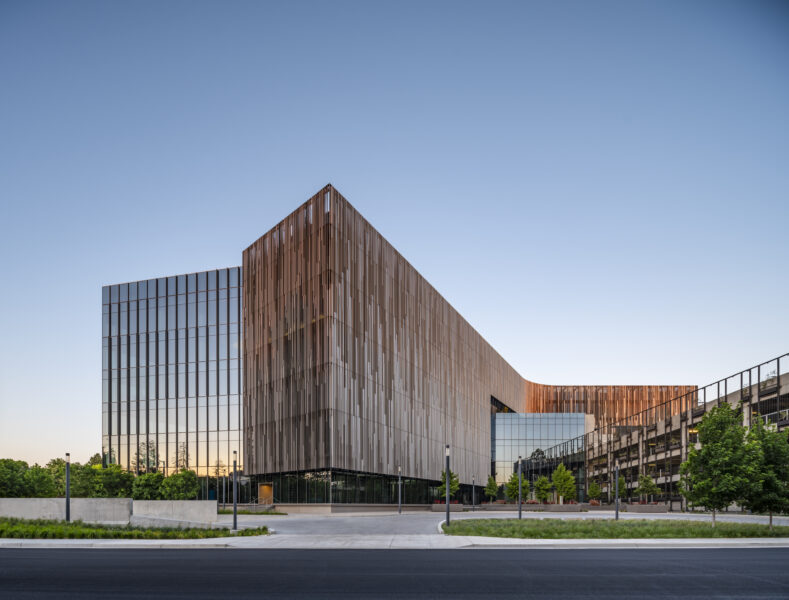
    Depending on vantage point and sun angle, the AI-generated louver shadowing changes the appearance of the Thirty75 Tech Building in Silicon Valley. The result is a façade that uses only one color of paint but shimmers.

    AI design assistance arrives

    One ARD Group study involved laminates that self-deform when subject to temperature, light or humidity. The materials would enable a façade that responds differently depending on conditions to provide shading, prevent overheating or increase privacy. But to simulate the laminates’ nonlinear and unpredictable response, the group turned to ML.

    “We used ML to predict how a passively actuated material would react to variable temperature changes,” said Martha Tsigkari, senior partner. “With the help of our bespoke distributed computing and optimization system, Hydra, we ran thousands of simulations to understand how thermoactivated laminates behave under varied heat conditions. We then used that data to train a deep neural network to tell us what the laminate layering should be, given a particular deformation that we required.”

    Predicting material deformation was just one application. To help automate mundane tasks and turbo-power productivity, the ARD Group is working on many more ideas around AI-powered design assist tools.

    Samples of different layering patterns display their deformations when exposed to direct heat. A still taken from a custom, interactive design assistant application, into which the trained neural network for designing laminates is embedded. Credit: Foster + Partners

    Verse Design faced similar performance constraints when designing the façade of Thirty75 Tech. The designers needed to find the optimal pattern of louvers to mitigate heat gain and meet California’s Title 24 energy efficiency standards.

    “The final geometries were generated parametrically with real-time simulation data,” Tang explained. “The geometries were fed back to the energy model to find and confirm the most energy-efficient combination of louver variations that met the intent of the visual expression and performance objectives.”

    Extraordinary content delivered faster

    Foster + Partners has also used surrogate models to replace slow analytical processes—and keep costs in check—when exploring the impact of changing design variables. These ML models train on huge datasets to deliver a prediction that is sufficiently exact and, most critically, available in real time. In early design stages, the surrogate model lets designers balance accuracy with the ability to make sound decisions sooner.

    Foster + Partners’ in-house application programming interface (API) lets clients connect from digital content creation tools. With these plug-ins, users can run predictions directly. The interface also lets designers deploy diffusion models like Midjourney to stir imaginings.

    “The capability of these transformers-based models to describe images, understand their context and make suggestions based on it has moved the discussion from image manipulation to natural language processing for content creation,” Tsigkari said.

    Intellectual property creates a conundrum

    Some creators express concern about losing control of intellectual property when feeding their own assets into AI apps. For instance, class-action lawsuits against software providers contest use of copyrighted images to train systems. Tsigkari stressed the need to understand security and IP considerations and read terms and conditions before using any software. But the challenges go beyond IP.

    “It is not only the fuzzy boundaries around IP that are argued,” she said. “The lack of robust legal frameworks to deal with AI and ringfence how data may be used are going to challenge how these technologies are implemented.”

    Tang doesn’t have the same concerns about IP. “As Voltaire said, ‘Originality is nothing but judicious imitation,’” he commented. “The idea is not to mindlessly copy but to critically apply the technology as a tool with generative capabilities. It requires that human intellectual and critical content to tease out the real meaning to us as designers and therefore become something slightly different.”

    Input determines outcome

    Given the dependence of AI output on the data that are input for training, another consideration for Tsigkari is the quality of AEC datasets. “There is one universal truth behind AI: data is king,” she said. “If we want to use and control these technologies to the best of our ability, we need to learn to control the data that drives them first.”

    She noted the need for consistent tagged building datasets that are “contextualized, socially appropriate, structurally viable, sustainability sensitive and code complying. Our first challenge is to collect, organize and process our data across disciplines in a meaningful manner so that we can leverage it. Deploying in-house trained—rather than pre-trained—models is also a very robust way of ensuring the quality of your results,” she added.

    Creativity balances AI and CHI

    As AI becomes more embedded in the work of architecture, how does the definition of creativity change? Tang evoked the “Star Trek” character Data when discussing the imperative of human agency to refine the outcomes AI generates. “Data is an artificial intelligent being constantly looking for the human side of himself,” Tang explained. “I don’t think AI can ever supersede or replace human intelligence, particularly CHI.”

    Tsigkari noted that humans have the upper hand on several qualities that enable creativity—including aesthetics, emotion, collaboration, communication and responsibility. “We should be focusing on how AI can become a creative assistant that is augmenting, rather than replacing, creativity—and the values we bring to the table are driving the changes we want to see.”

    These Australian Hiking Cabins Are a Sight to Behold

    This story was originally published by on the Bluebeam Blog.

    Roughing it in the great outdoors is a little more luxurious in these cabins, which underwent a painstakingly detailed and complex design and construction process (from 2023)

    hen it comes to roughing it in the great outdoors, most of us would be excited to spend the night in a simple log cabin or lean-to. But in Australia, which boasts thousands of miles of hiking and camping trails throughout its many national parks and wilderness areas, they do things a little differently.

    So when it came time to design and construct the campsites along the challenging 13-day Grampian Peaks Trail route, planners knew they needed something special to match the natural scenery. But how could they create breathtaking structures in remote areas, many of which are unreachable by road?

    Nick Griffin, Melbourne Co-Studio lead and associate director at McGregor Coxall, and Justin Noxon, architect and studio partner at Noxon Giffen, were ready to rise to the challenge.

    An unmatched location

    For Griffin and Noxon, the natural beauty of the site inspired an expansive creativity in the team’s approach to the design process. Also known by its aboriginal name, Gariwerd, Griffin described the area as “a significant landscape,” adding, “The environmental and cultural significance of Gariwerd drew us to the project.”

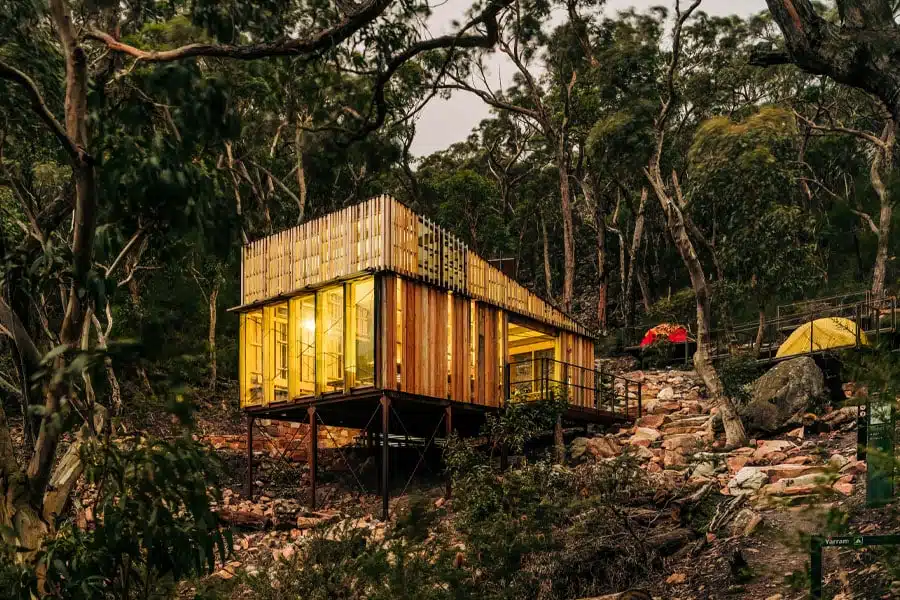
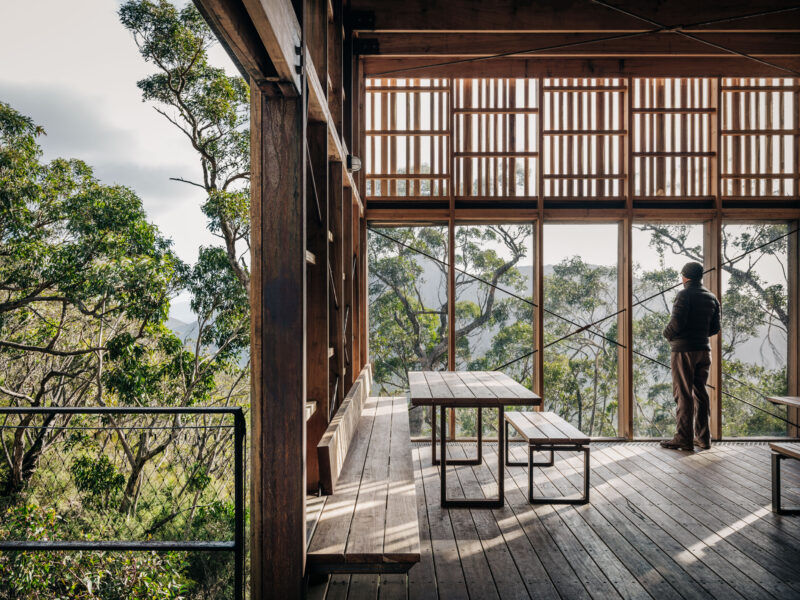
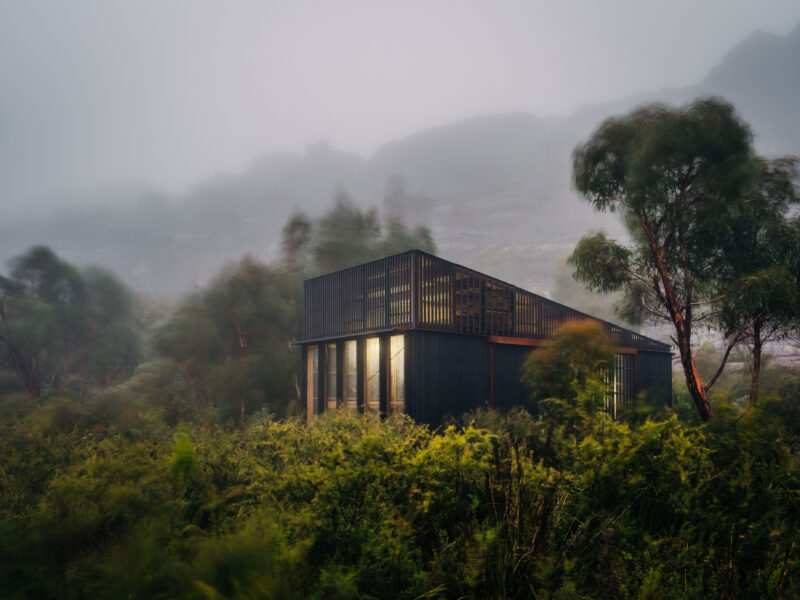
    A look inside one of the cabins. Photo: Adam Gibson.

    One of the most biodiverse places in Victoria and home to about a third of all native area plant species, there’s a reason this remote trail has been so perennially popular with ambitious hikers from all over the globe. “With such diverse terrain and unique natural resilience, the landscape and its systems form the primary inspiration for our design response,” Griffin said.

    For Griffin and his associates, taking the time to truly immerse themselves in this landscape was an essential part of the design process. “The design team made multiple trips out to Gariwerd to spend time observing and documenting site conditions,” he said. “Immersion in each individual site took place to gain a holistic appreciation for and knowledge of the landscape in different weather conditions and at times of day.”

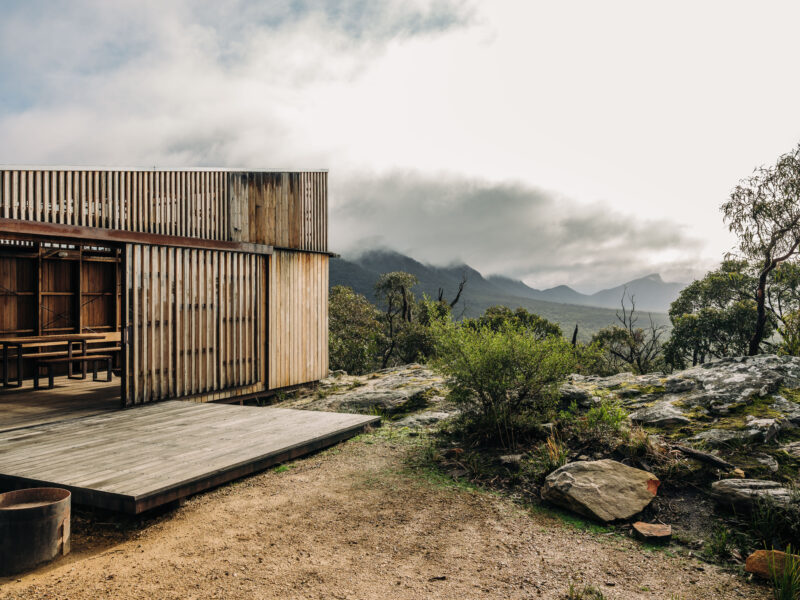
    After spending time within each site, Griffin said the team created structures that mirrored the natural landscape that surrounded them, drawing both visually and materially from the park. “The form and placement of the architecture were inspired by the large-scale sandstone uplift evident throughout the Grampians; this is echoed in the single pitch of roof elements,” Griffin explained.

    Photo: Adam Gibson.

    Each structure even makes use of materials drawn naturally from the landscape. “The design vision included a robust and natural materials palette, considered in response to each individual site’s nature, colors and textures,” Griffin said. “For example, all rock was sourced from within each campsite.”

    Designing with hikers in mind

    The team knew how its structures needed to respond to the landscape—but what about the people who would be using them? Griffin said that throughout the project, the design team kept the specific experience of hikers at the forefront of their processes.

    “The experiential design of all campsite elements was mindful to be specific to that of a hiking experience, therefore the comfort target for architectural elements sought to elevate only slightly from that of a tent,” he explained. “The aim was to feature architecture that would grow in parallel with the nature that surrounds it, minimizing harm to environments and keeping Gariwerd’s stunning landscape as the hero.”

    Noxon said this commitment was clear from the moment the team read the key parameters that would define the project. “The brief called for the campsites to ‘touch the ground lightly,’ minimizing the impact on the environment and maintaining Gariwerd’s iconic, biodiverse landscape as the hero,” he said. “The structures were built to provide comfort and amenities for hikers, using materials that would blend into the landscape over time. Structures provide the essentials of weather protection and basic shelter, collect water, treat wastewater on-site and provide solar-powered battery charges for hiker safety for mobile phone navigation and safety within the context of a remote hiker trail experience.”


    Photo: Adam Gibson.

    Where and how the cabins were constructed was as important as the amenities they contained.

    “Off-grid campsites are designed with mindfulness to guidelines and tracks—intuitive circulation allows for more sustainable campsites that minimize public access to dense vegetation,” Noxon said. “Accommodating to a variety of users, abilities and intensities, the walk will conserve and protect Gariwerd’s beauty, achieving the highest possible grade of environmental sensitivity through the protection of site-specific conditions such as biotope preservation, overland flow management and microclimate.”

    Construction complexities

    Once construction began, Griffin said the complexity of the project became clear. “The remoteness of the 11 sites represented a lot of obstacles,” he said. “One of the major challenges was to ensure a consistent quality was achieved across several sites under construction concurrently.”

    Collaborating closely with their contractor and Parks Victoria, which backed the project, Griffin and his team made regular visits to the Gariwerd sites throughout the construction process, which used a modular approach that allowed for the prefabrication of all of the elements, which could then be transported via airlift or vehicle to their designated sites.

    Several sites were constructed concurrently as part of a prototyping process whose lessons would be applied to the next batch of sites—a unique method that allowed the team to meet their timing and budgetary goals. When lockdowns made in-person site visits challenging, the team figured out how to do virtual inspections from afar, so construction could stay on track.


    Photo: Adam Gibson.

    Now that the project is open to the public, Griffin and Noxon say the response has been enthusiastic. “The feedback that the project team have received on the project has been largely positive,” Griffin said. The campsites provide a great level of amenity for hikers without inhibiting the sense of nature. The campsite interventions are true to the brief of being subservient to the natural landscape; they simply add a layer of comfort to those seeking to immerse themselves in the magical Gariwerd landscape.

    Noxon added that he hopes the structures will enhance hikers’ appreciation for the beauty of the region. “The campsites are designed to support the hiker experience of Gariwerd; to become part of the landscape; to promote connection and understanding of Gariwerd,” he said. “The architectural response fosters a slow, gentle and quiet interaction, an elemental experience of place.”

    How Modern Fire Protection Is Revolutionizing Fire Safety with Bluebeam

    This story was originally published by on the Bluebeam Blog.

    By combining Bluebeam’s digital tools with a commitment to Indigenous partnerships, Modern Fire Protection is setting new industry standards

    Australia-based Modern Fire Protection is a family owned and operated fire protection company that has been providing high quality services since 2015. Delivering comprehensive, cost-effective fire protection solutions, Modern Fire Protection works alongside its partners from concept design and supply to installation and ongoing service and maintenance for any size project.

    Recognized as a Certified Supplier for Supply Nation, Modern Fire Protection has developed a range of partnerships with other Indigenous-controlled organizations and is focused on developing a culturally safe and capable environment.

    “We are continually striving to increase our Indigenous workforce and the employment of women undertaking apprenticeships,” said Bill Hockley, the company’s managing director.

    With extensive experience across diverse requirements such as high-rise residential buildings, shopping centers, major commercial buildings, mine sites and complex special hazard installations, Modern Fire has a broad footprint across southeast Queensland. Robina Shopping Centre, Sunshine Coast Plaza, Brisbane Airport, Logan Hospital and Brisbane Racing Club are among the sites its expert service has helped protect.

    A trusted solution

    Trust is central in a business where its stock and trade is building safety.

    Modern Fire ensures its trusted reputation is backed by accreditations and industry certifications, and that its workers are all suitably qualified in their roles.

    Alongside its strong team presence, the organization is firmly focused on implementing tools that enhance its reputation through increased transparency, accuracy and productivity, including Bluebeam.

    Crossing the digital divide

    Modern Fire first deployed Bluebeam tools in early 2023. “Before Bluebeam we printed everything out and used highlighters,” Hockley said. “It meant that after the bid was developed, the project manager didn’t have easy access to all the information he needed.”

    Deploying Bluebeam not only built time and accuracy improvements into the bidding process, but it also meant digital information was accessible when projects came to life.

    “Bluebeam has revolutionised how we operate; it is one of our foundational tools,” Hockley said. “Through using its tools we minimise redundancy, boost accuracy and expedite critical tasks—all of which cultivate trust with our customers.”

    Designing success through Bluebeam

    Construction Manager Dan Sawyer implements Bluebeam from the inception of the design process.

    “I use if for everything I touch—I live in it,” he said. “When competing for tenders I am able to save the detailed drawings and all detail that underpins our bid development. We then use this detail to inform and develop an accurate project plan when we win the contract.”

    Bluebeam offers a plug-in for Revit that enhances the design process by integrating 3D components with 2D drafting annotations. This tool facilitates coordination with design teams and streamlines the development of design solutions.

    Managing multiple and diverse priorities with ease

    Project Manager Josh Hall considers real-time collaboration as key to his successful delivery of multiple and concurrent priorities. “The simple fact is that Bluebeam does exactly what I need it to do—it makes my job easier to do and do well,” he said. “It should be a non-negotiable tool across all organizations in the construction industry.

    The key tasks Hall deploys Bluebeam for include:

    – To communicate clearly using AEC-specific tools to mark up contracts, drawings, photos and documents.

    – To complete drawing overlays and dimension planning up to scale.

    – To review detailed planning and information and confirm project delivery requirements.

    A long-term Bluebeam user, Hall joined Modern Fire on the condition that the product was a key tool he could access. “I’ve been using it for five years across various roles and it underpins my success in delivering optimized outcomes in project delivery,” he said.

    Modern Fire Project Administrator Hanna Greaves first began harnessing the capability of Bluebeam and its tools six months ago.

    “I do all of the quantity takeoffs for tender submissions—it’s a critical tool to ensure accuracy,” she said. “It is relatively straightforward to use and quite intuitive—it was easy to self-teach and to build my skills in unlocking the Bluebeam tools as I go. Before this everything was printed out and counted out using a highlighter. Time saving and accuracy has been a great outcome for me—in particular thanks to the search tool capability and categorization tools.”

    Looking toward the future

    “Tools such as Bluebeam mean we are better able to position Modern Fire Protection as a trusted and permanent force in the industry,” Sawyer said. “It provides the opportunity to embed better systems and processes and reinforce the foundation of our business as we head into the longer term.”

    Bluebeam is a tool that is deployed prolifically among Modern Fire’s project partners.

    “When working across projects such as staged medical or shopping center precincts with multiple partners, we are all able to talk to a common language, so to speak,” Sawyer said. “These tools enable real-time agility and responsiveness—enhancing our professionalism and elevating our position in the industry. It underpins our value and supports our future growth.”
    Transforming Construction: The Rise of Industrialized Construction

    Imagine stepping into a world where construction projects mimic the efficiency and precision of a car assembly line. In today’s construction landscape, plagued by sustainability concerns, slow technological adoption, and workforce issues, a revolutionary approach is making waves—industrialized construction. But what exactly is this buzzworthy trend, and how could it redefine our built environment?

    What is Industrialized Construction?

    At its core, industrialized construction involves applying manufacturing principles to the construction industry. Think of it as construction’s answer to the assembly line—where efficiency, consistency, and quality control reign supreme. This approach doesn’t just tweak how we build; it completely overhauls the process, turning traditional construction on its head.

    Challenges Addressed by Industrialized Construction

    The construction industry is notorious for its environmental footprint, contributing significantly to landfill waste and CO2 emissions. According to a recent industry report, construction activities generate approximately 30% of landfill waste globally and a staggering 42% of annual global CO2 emissions (Science Direct) (Architecture 2030). Traditional building methods often start from scratch, creating inefficiencies and of course tons of waste. With industrialized construction, we may see a light at the end of the tunnel, offering a sustainable alternative, emphasizing reusable and standardized components that lead to less waste and lower emissions. Plus, it addresses another pressing issue: the shrinking pool of skilled labor. By streamlining processes and reducing the need for on-site labor-intensive tasks, this method can make the industry more appealing to new talent.

    Future of Construction: Productization and Process Optimization

    Industrialized construction isn’t just about building faster—it’s about building smarter. By productizing construction elements—creating predefined, customizable building modules—the industry can achieve unprecedented levels of repeatability and precision. This standardization leads to significant reductions in errors, rework, and more importantly waste, ultimately enhancing overall efficiency and sustainability. Moreover, this method fosters a collaborative environment where architects, engineers, and contractors can work together seamlessly from the early stages of a project, ensuring better outcomes and more innovative solutions.

    What is next for Industrialized construction?

    Industrialized construction represents a significant shift towards a more efficient and sustainable future in building. It’s a promising solution to many of the construction industry’s most persistent problems, from environmental impact to labor shortages. As we look to the future, embracing these innovative practices could be key to transforming the landscape of construction and making sustainable development a standard practice.

    Eager to explore the full potential of efficient and sustainable building practices? Dive into our first blog post: “Informed Design: What You Need to Know?”

    Informed Design: What You Need to Know?

    Embracing the Future of Construction

    Hey there! If you’re involved in the construction industry, you know how critical it is to keep up with technological advancements to stay ahead of the competition. That’s where Autodesk’s Informed Design for Revit and Inventor comes into play. It’s not just another tool—it’s a game-changer for anyone in industrialized construction. Let’s dive into what Informed Design is all about and how it can make a real difference in your projects.

    Understanding Informed Design

    Informed Design is a specialized set of tools designed for seamless integration with Autodesk Revit and Inventor. It bridges the often-tricky gap between initial design and final manufacturing. For designers using Revit, it means embedding deeper levels of detail right into the BIM models, ensuring that everything designed is optimized for manufacturing. On the flip side, for those on the manufacturing end using Inventor, it translates these detailed designs into ready-to-go fabrication models.

    Why Should You Care?

    • Collaborate Like Never Before: Imagine a world where architects, engineers, and fabricators are all singing from the same hymn sheet—this is what Informed Design offers. Real-time collaboration means fewer mistakes, less back-and-forth, and streamlined project timelines.
    • Boost Your Efficiency: Manual processes are so last decade. Informed Design automates the grunt work, allowing you and your team to focus on creativity and execution. Less time on tedious tasks means faster project completion and reduced chances for costly errors.
    • Go Green, Reduce Waste: Getting precise about materials not only saves money but also significantly cuts down on waste. Informed Design helps you use only what you need, making your projects more sustainable and environmentally friendly.
    • Scale It Up: No matter the project size, Informed Design scales to meet your needs. This tool grows with your business, handling everything from small builds to massive commercial projects with ease.

    The Competitive Edge You Need

    Adopting Autodesk Informed Design for Revit and Inventor isn’t just about keeping up; it’s about staying ahead. It transforms traditional construction processes, allowing you to deliver higher quality projects faster and more efficiently. It’s a robust solution tailored for today’s fast-paced construction demands.

    How to get started?

    Interested in taking your construction projects to the next level? Reach out to us to explore more about how Autodesk Informed Design can fit into your workflow and build smarter, faster, and greener. Chat with me today and let’s discuss how to transform your approach to construction!

    Accruent Meridian 2024: Streamlining Engineering Information For All Industries

    In today’s rapidly evolving industries, from manufacturing to utilities, managing and leveraging complex engineering information is key to success. In this context, Accruent Meridian 2024 emerges as a robust solution to help organizations achieve compliance, improve efficiency, and manage asset lifecycle information.

    Accruent has designed Meridian 2024 to cater to a wide range of industries, providing seamless access to accurate, up-to-date, and compliant engineering data. In this blog, we’ll explore how Meridian 2024 transforms asset and document management across sectors and how its interactive capabilities can streamline your operations.

    WHAT IS ACCRUENT MERIDIAN 2024

    Accruent Meridian 2023 is a comprehensive Engineering Information Management (EIM) solution designed to manage the complex, highly regulated documentation environments of various industries. Whether you’re dealing with critical infrastructure in oil & gas or managing compliance in pharmaceuticals, this tool offers:

    • Centralized document management for all engineering assets.
    • Version control and audit trail for regulatory compliance.
    • Collaboration tools to streamline workflows across departments.

    INDUSTRY-SPECIFIC BENEFITS OF MERIDIAN 2024

    1. Manufacturing: Accelerate Production with Real-Time Data

    In the manufacturing sector, managing engineering data efficiently is critical to reducing downtime and improving operational efficiency. Meridian 2024 allows manufacturers to:

    • Track asset changes in real-time, ensuring machines and production lines are always running optimally.
    • Monitor equipment performance with easy access to updated engineering data, preventing costly breakdowns.
    • Ensure compliance with industry standards and safety regulations via centralized document management.

    Infographic:

    oil & gas: improve DOCUMENT compliance and asset management

    Oil & gas industries deal with complex regulations and harsh environments that demand top-tier asset management. Meridian 2024 provides tools to:

    • Manage remote assets by ensuring all documentation is centralized, regardless of geographical location.
    • Adhere to strict compliance standards with built-in audit trails and version control.
    • Enhance safety through real-time access to engineering documentation, reducing human error in critical operations.

    Pharmaceuticals: Maintain Regulatory ASSET & DOCUMENT Compliance with Ease

    In highly regulated industries like pharmaceuticals, the margin for error is extremely thin. Compliance and safety are top priorities. Meridian 2024 enables pharmaceutical companies to:

    • Streamline FDA audits by having every document, from equipment manuals to process validations, available at the click of a button.
    • Maintain full traceability with a robust version control system that captures every change.
    • Ensure consistent quality by making sure the latest approved procedures are easily accessible to the staff on the floor.

    Case Study: AbbVie Accruent Meridian Case Study

    Utilities: Enhance Asset & Document Lifecycle Management

    In the utilities sector, companies must ensure that their infrastructure remains operational while complying with ever-changing regulations. Meridian 2024 offers:

    • Improved asset lifecycle management by storing all relevant documentation in one platform, accessible from anywhere.
    • Increased efficiency by reducing the time needed to find or update documentation for field operations.
    • Regulatory compliance through audit trails it ensures accountability for every modification to an asset.

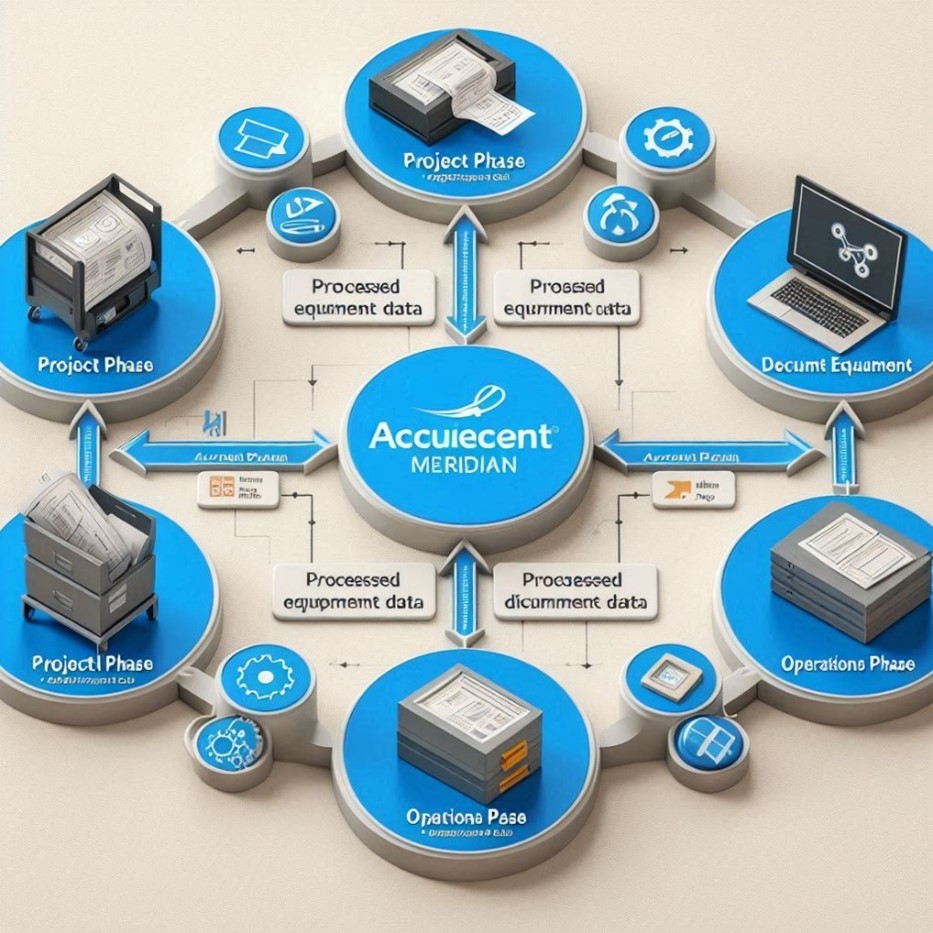
    Diagram:

    Meridian 2024 integrates project with operations documents & assets

    Accruent Meridian 2024 goes beyond compliance and asset management. It also plays a crucial role in project management by integrating engineering documentation directly with your assets and equipment throughout the entire lifecycle of a project—from design and construction to operation and decommissioning. Here’s how:

    • Streamline Project Documentation: Meridian 2024 provides a centralized platform to manage all documents related to project planning, design, and execution. All documents—drawings, schematics, and technical specifications—are linked directly to specific assets, ensuring that the most current information is always available.
    • Efficient Collaboration: Large oil & gas projects often involve multiple stakeholders across different departments and external contractors. Meridian allows for easy collaboration, providing version control, document tracking, and approval workflows, ensuring that all parties are working with the latest, approved versions of documents.
    • Seamless Integration with Assets: Meridian 2024 seamlessly integrates project documents with the operational assets they support. Once a project is completed, the as-built documentation, including manuals, engineering diagrams, and equipment data sheets, can be stored and linked to the respective assets within the system. This ensures that when maintenance or future upgrades are required, teams have instant access to the full historical record of each asset.
    • Track Changes During Projects: One of the greatest challenges in oil & gas project management is tracking changes and ensuring all modifications are properly documented. Meridian 2024’s version control ensures that all changes to equipment, processes, and documentation during project execution are captured and traceable, helping to avoid costly errors or rework.
    • Compliance Throughout Asset Lifecycle: Meridian ensures that regulatory compliance is maintained throughout the entire asset lifecycle, from initial installation to ongoing operation. Each piece of equipment or asset has its associated documents and history tracked in Meridian, ensuring that the necessary certifications, inspections, and maintenance records are always accessible and up to date.

    FlowChart:

    Key Features of Accruent Meridian 2024

    1. Centralized Platform: All engineering documents stored and accessible from a single platform, ensuring no information is lost.
    2. Version Control: Every change is tracked, making it easy to maintain compliance and traceability.
    3. Collaboration Tools: Collaborate across departments and locations, ensuring that engineering, operations, and maintenance teams work with the latest data.
    4. Audit Trails: Keep track of every action, modification, and decision, streamlining the compliance process.

    Cloud & On-Premises Options: Meridian can be deployed in the cloud or on-premises, offering flexibility based on your organization’s needs.

    How Meridian 2024 Drives Digital Transformation

    Across all industries, digital transformation is a key focus. Accruent Meridian 2024 aids in this transformation by:

    • Reducing manual tasks through automation of document management.
    • Integrating with other enterprise systems such as ERP, CMMS, and GIS, providing a seamless digital environment.
    • Enhancing decision-making by offering real-time, accurate data about assets, systems, and processes.

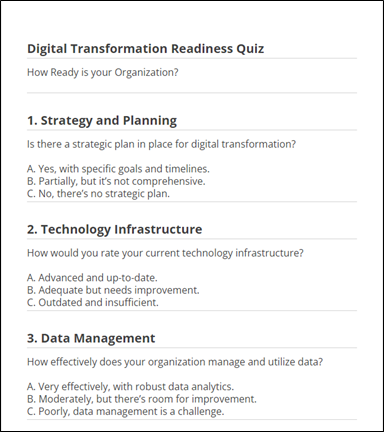
    Quiz:

    Why Choose Accruent Meridian 2024?

    In a world where regulations are tightening, operations are becoming more complex, and downtime can cost millions, Accruent Meridian 2024 is an invaluable tool for any industry. It offers:

    • Increased operational efficiency by providing the right information at the right time.
    • Reduced risks by ensuring complete document traceability and regulatory compliance.
    • Future-proofing your business with scalable solutions that grow with your company.

    Ready to Implement Accruent Meridian 2024?

    Whether you’re in manufacturing, oil & gas, pharmaceuticals, utilities, or another industry, Accruent Meridian 2024 can streamline your operations and improve your asset management. Learn more about how Meridian can benefit your organization by scheduling a personalized demo.

    Conclusion

    The future of engineering information management is here with Accruent Meridian 2024. By providing a centralized, flexible, and highly secure solution, it’s empowering industries to achieve compliance, reduce downtime, and drive efficiency. The platform’s robust feature set combined with industry-specific adaptability makes it a go-to solution for organizations looking to stay ahead in today’s competitive landscape.

    To learn more about Accruent Meridian and how it can help your team, don’t hesitate to get in touch with the  SolidCAD Meridian Team.

    Executive Edge Episode 3 – Overcoming Productivity Challenges in Your Business

    As business leaders, we know that maintaining success in today’s competitive landscape requires more than just innovative ideas; it demands a relentless focus on productivity. Let’s dive into why productivity is vital for sustaining business success and how it can transform your organization from the last installment. 

    In the final episode of our “Executive Edge” series focused on productivity, SolidCAD President Marcus Tateishi takes a hard look at why businesses often struggle to achieve productivity improvements. Despite knowing the importance of productivity, many organizations hit roadblocks that derail their efforts. Here’s my take on this episode and how you can overcome the common pitfalls that business leaders face when it comes to boosting productivity. 

    Challenges in Achieving Productivity 

    Our President didn’t sugarcoat it—strategic initiatives around productivity often fail, especially when it comes to investing in technology. According to Forbes, the failure rate of digital transformations is a staggering 84%. That’s right, 84%! These failures usually involve budget overruns, missed deadlines, and unmet expectations (Productivity episode 3). 

    Why Businesses Struggle 

    1. Fear of Failure: Given the high failure rate, many leaders hesitate to invest in productivity initiatives, fearing it could be career-ending if the results fall short. 
    1. Consultant Over-Reliance: While consultants often guide businesses through productivity transformations, they sometimes present overly optimistic budgets and timelines, setting organizations up for failure. 
    1. Clinging to the Status Quo: In the absence of fierce competition, companies tend to maintain their current practices, but this “if it ain’t broke, don’t fix it” mentality can lead to stagnation, especially in rapidly evolving industries (Productivity episode 3). 

    Getting It Right: 4 Key Aspects to Success 

    Overcoming productivity challenges requires a focused approach, and Marcus lays out four major aspects that I will dive deeper to: 

    1. Choosing the Right Technology: Investing in technology is essential, but the key is selecting the right tools for your organization’s specific needs. It’s not just about having the latest tech—it’s about technology that fits your workflows and can scale with your business. The wrong choice can lead to wasted resources and frustration, while the right decision can unlock new levels of efficiency. 
    1. Selecting the Right Consultant: Consultants can be vital in guiding your productivity journey, but not all consultants are equal. There is an importance of selecting consultants who have a deep understanding of your industry and realistic expectations about budget and timelines. They should be partners who help you implement sustainable, long-term changes rather than offering quick fixes. 
    1. Training Your Staff: No technology or strategy will be effective without a properly trained workforce. Investing in employee training ensures that your team can fully utilize the tools at their disposal. Marcus points out that a well-trained staff is a company’s greatest asset—they bring your productivity plans to life. 
    1. Having the Right People in Place: Ultimately, the success of your productivity initiatives depends on the people in your organization. Marcus underscores the importance of evaluating whether you have the right team members in place to support your productivity goals. Having people who are adaptable, innovative, and aligned with the company’s vision is critical for sustained success. 

    These four aspects work hand-in-hand: focusing on just one while ignoring the others won’t cut it. To really boost productivity, your technology, consulting, training, and team need to be aligned. Think of each as a piece of a bigger puzzle—if one piece is missing or doesn’t fit right, the whole thing falls apart. When all these elements are in sync, that’s when real productivity gains happen. 

    The Path Forward 

    Despite these challenges, there is a high reward for getting it right. Companies that invest wisely in digital transformations and productivity improvements see significant growth and efficiency gains. Even McKinsey study shows that digitally mature companies grow much faster than their less mature counterparts (Productivity episode 3). 

    Packed with insights and practical advice for business leaders looking to enhance productivity, watch the second video below: 

    Bluebeam Actions vs. Adobe

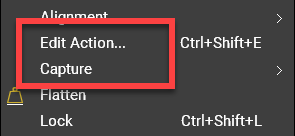
    We Bluebeam Revu users are lucky enough to have access to 2 tools: Edit Action and Capture.

    Edit Action

    This tool does a few things, but many users use it for adding a hyperlink to a selected markup.

    Capture

    This tool allows a user to attach an image to any markup. The image takes up no space until the user clicks it.

    Usage

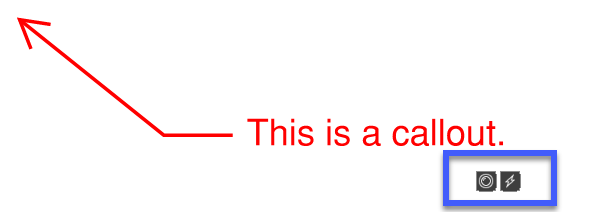
    These 2 tools are accessed by selecting a markup and right clicking. After configuring, they will appear as symbols below the markup. The left one is the image, and the right is the hyperlink. Clicking on the image symbol displays the image in its own temporary interface. Clicking the link opens the link in a new Revu tab.

    Gotcha

    There could be a slight problem though depending on which PDF software your recipient uses. If your recipient uses Bluebeam Revu, there is no problem. These symbols appear and they can be clicked on. If they use any other software, such as Adobe Acrobat, these 2 symbols don’t appear, and they don’t do anything.

    Is there a workaround?

    Workarounds

    1. Flatten the markups (Hyperlink): The link symbol will not appear, but when your recipient moves their mouse over your markup, the link will be clickable.
    2. Flatten the markups (Image): Flattening the markups has no effect on the captured image. Your recipient will have no idea there was ever an image attached to that markup. Sorry, but you’ll have to add the image as a separate markup.

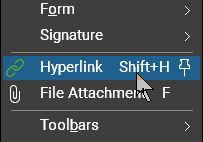
    The other hyperlink tool: Use this tool instead of the Edit Action tool. Adobe users will be able to click these even if you don’t flatten the markups.  You’ll find this in the Tools menu. FYI, this creates a separate markup and it’s in no way linked to any other markup.

    For any questions reach out to your sales rep or contact us at info@solidcad.ca

    Civil 3D 2025.1 Update

    The Civil team at Autodesk has released the latest update to Civil 3D 2025. Click here to see Release Notes and click here for the Online Help page. As usual, the update can be installed via the Autodesk Access app in your Windows status bar, or by downloading the update at your Autodesk Account page.

    Here are a few noteworthy new features:

    Corridor Performance

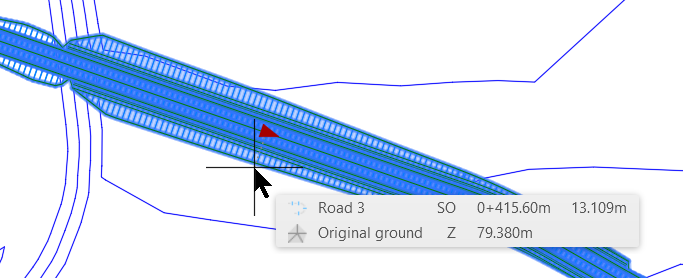
    If you like to grip-edit corridor regions, but you are apprehensive due to the poor performance and laggy cursor, you’re in luck. I tested a very large corridor with a dense assembly frequency, and I noticed zero cursor lag! Impressive.

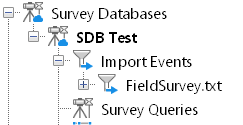
    Survey Database

    The survey database is now fully supported in Autodesk Docs.

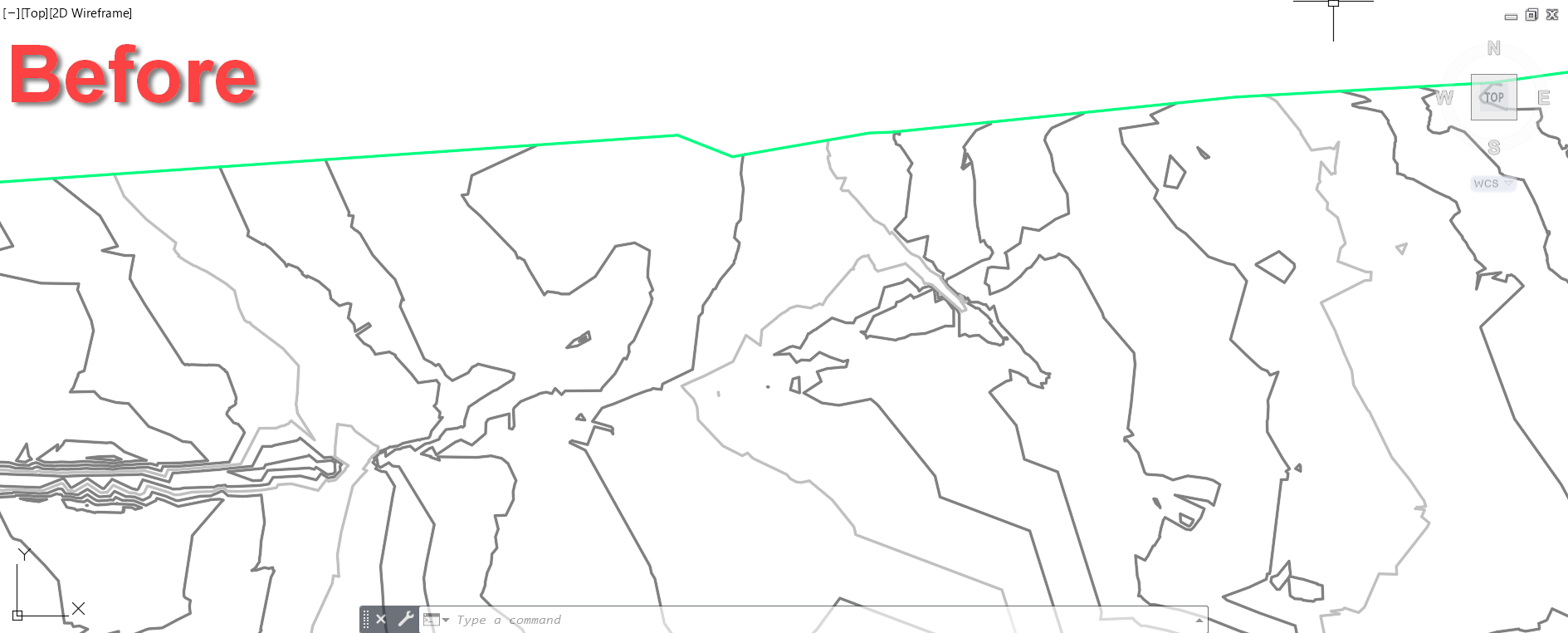
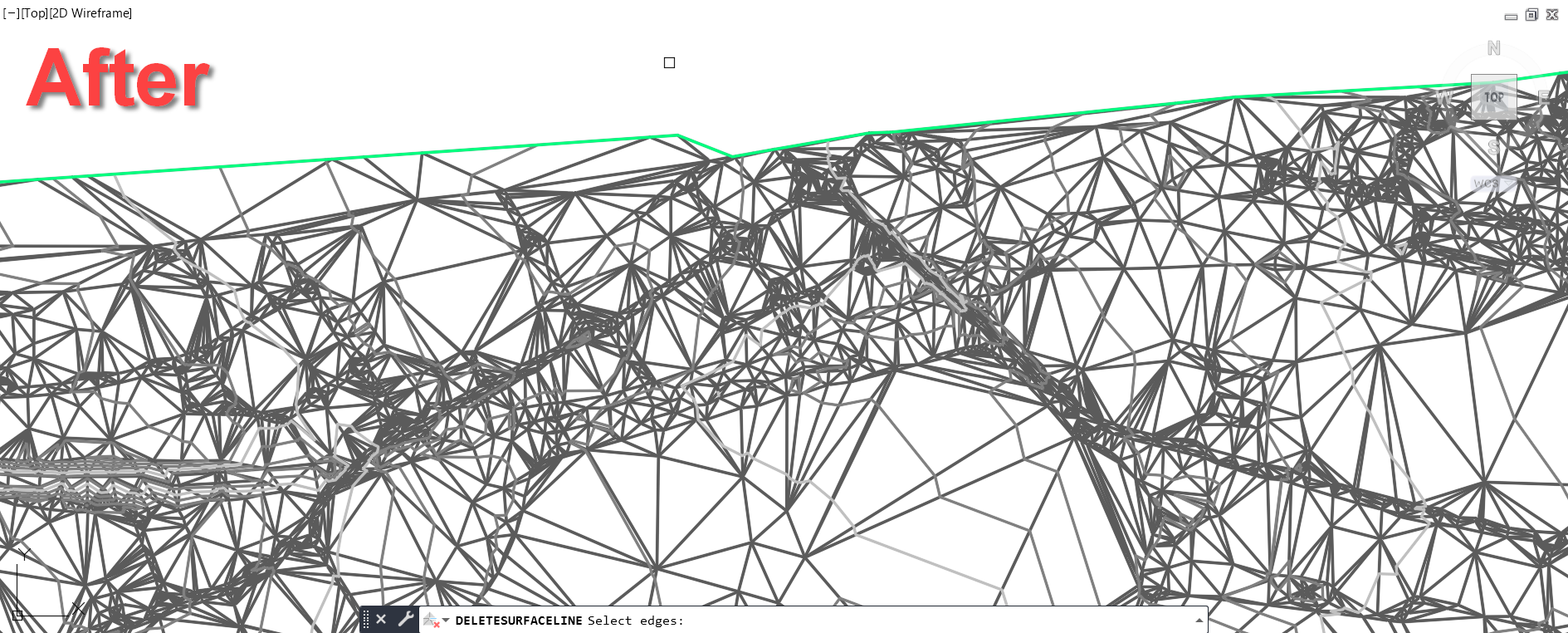
    Surfaces

    Imagine a surface style that displays only contours, and that style is assigned to a surface. Your goal is to edit the TIN lines or points. In 2025, you’d need to assign a style with those components turned on. Now in 2025.1, these components are automatically turned on after initiating these edit tools.

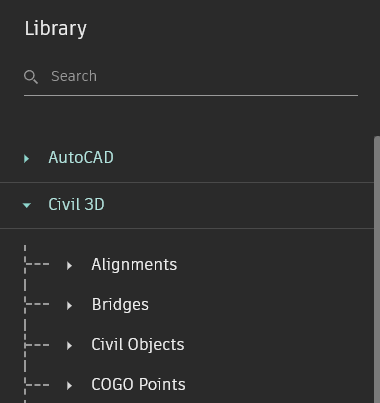
    Dynamo

    If you’re a Dynamo developer, or you know one:

    • 1100 new nodes have been added.
    • The library has been reorganized.
    • The Dynamo Core has been upgraded to 3.2.2
    • Colour control has been improved.

    For any questions reach out to your sales rep or contact us at info@solidcad.ca

    Executive Edge Episode 2: Overcoming Productivity Challenges in Your Business 

    In the second episode of our “Executive Edge” series, Marcus Tateishi dives straight into the challenges businesses face when trying to improve productivity. If you haven’t caught our first episode yet, where we break down why productivity is such a big deal, check it out here: Why Productivity Matters for You. 

    Even though most of us know what drives productivity, many businesses still struggle to actually achieve it. In this episode, Marcus doesn’t just explain the “why,” but more importantly, the “how” of overcoming these hurdles—and makes a convincing case for why productivity should be a top priority for every business leader. 

    Why Focus on Productivity as a Canadian? 

    Here’s the hard truth: Canada’s labor productivity has been on the decline. From 1981 to 2021, productivity dropped from 88% to just 71% of the US levels. This steep decline is a wake-up call for Canadian businesses to start making productivity a priority if we want to stay competitive on the global stage (Productivity episode 2). 

    The Three Key Drivers of Productivity 

    Marcus lays out three crucial factors for boosting productivity: 

    1. Capital Intensity: The tools your team uses matter. The better the tools, the better the output. Investing in the right technology can make a world of difference. 
    1. Labor Composition: This one’s all about your workforce. The more skilled and well-trained your employees are, the faster and better their work will be. 
    1. Multi-Factor Productivity: This focuses on how effectively you’re using your capital and labor together. Are your people and tools being used in the best possible way? This is where management practices, competition, and smart decision-making come into play(Productivity episode 2). 

    Why Productivity Pays Off 

    1. Boosting Profit Margins: More output from the same resources means higher profit margins—it’s that simple. 
    1. Staying Competitive: Productivity is your secret weapon for staying ahead in a global market. The businesses that focus on it will outshine their competitors. 
    1. Sustainability and Growth: Efficient resource use doesn’t just help you survive—it helps you thrive. It builds a foundation for long-term success (Productivity episode 2). 

    Departmental Contributions 

    Here’s the big takeaway: every department in your organization can and should contribute to boosting productivity. Equip your team with the best tools and provide them with top-notch training. It’s not just about cutting costs; it’s about empowering your people to work smarter and more efficiently. As leaders, it’s our job to evaluate our productivity metrics and make informed decisions that drive improvements across the board. 

    Want to learn more about how you can sustain productivity in your business? Watch the next installment, where valuable insights and practical tips that every business leader can benefit from.